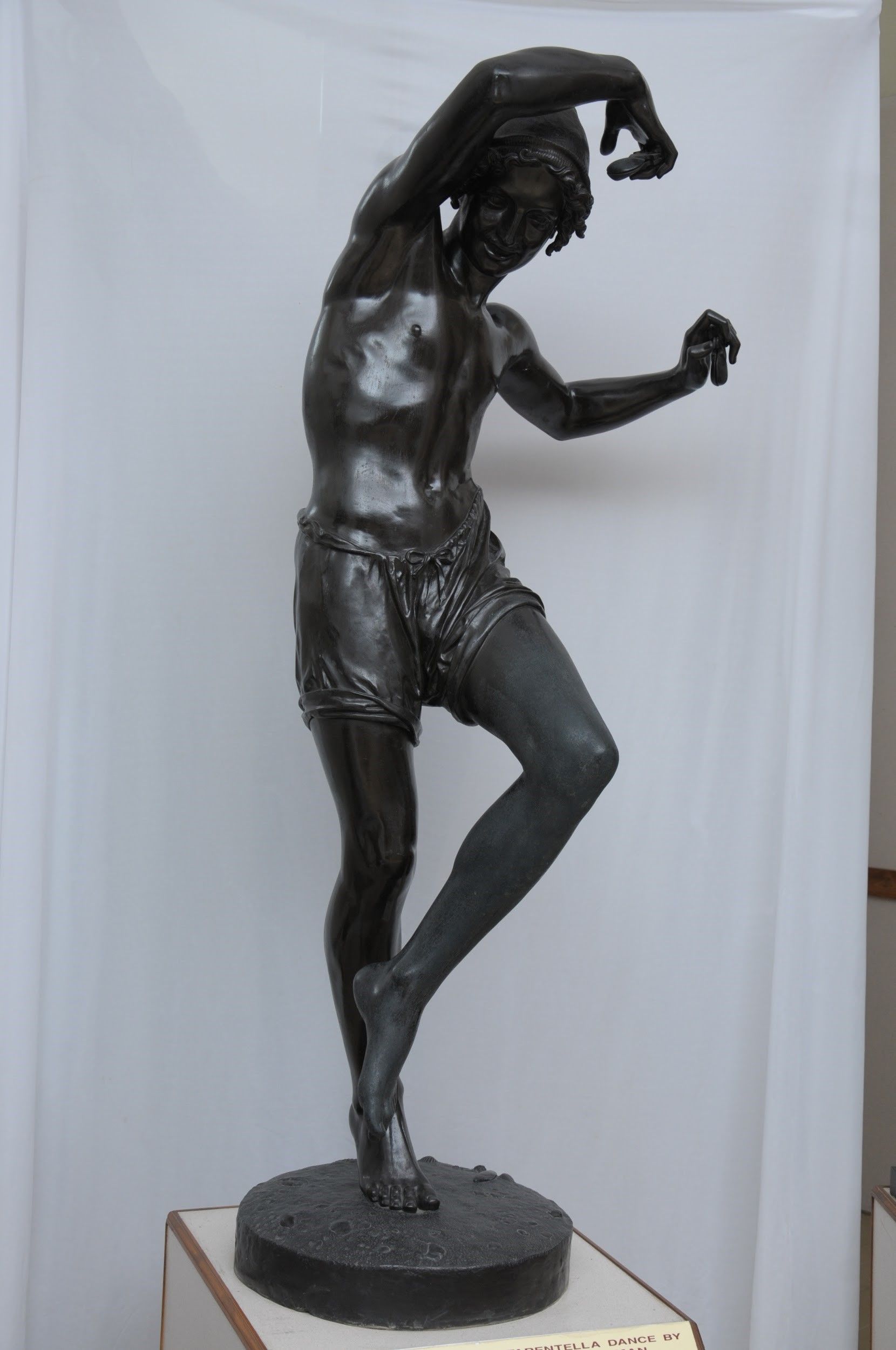
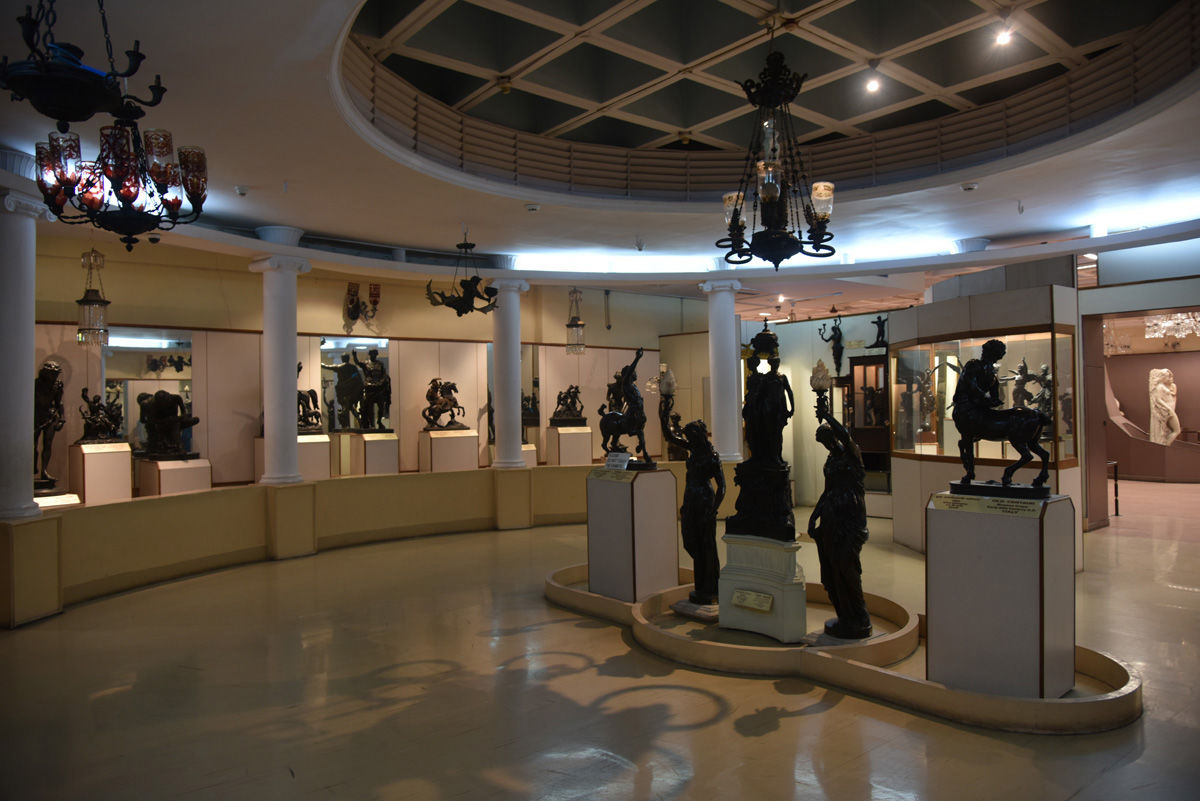
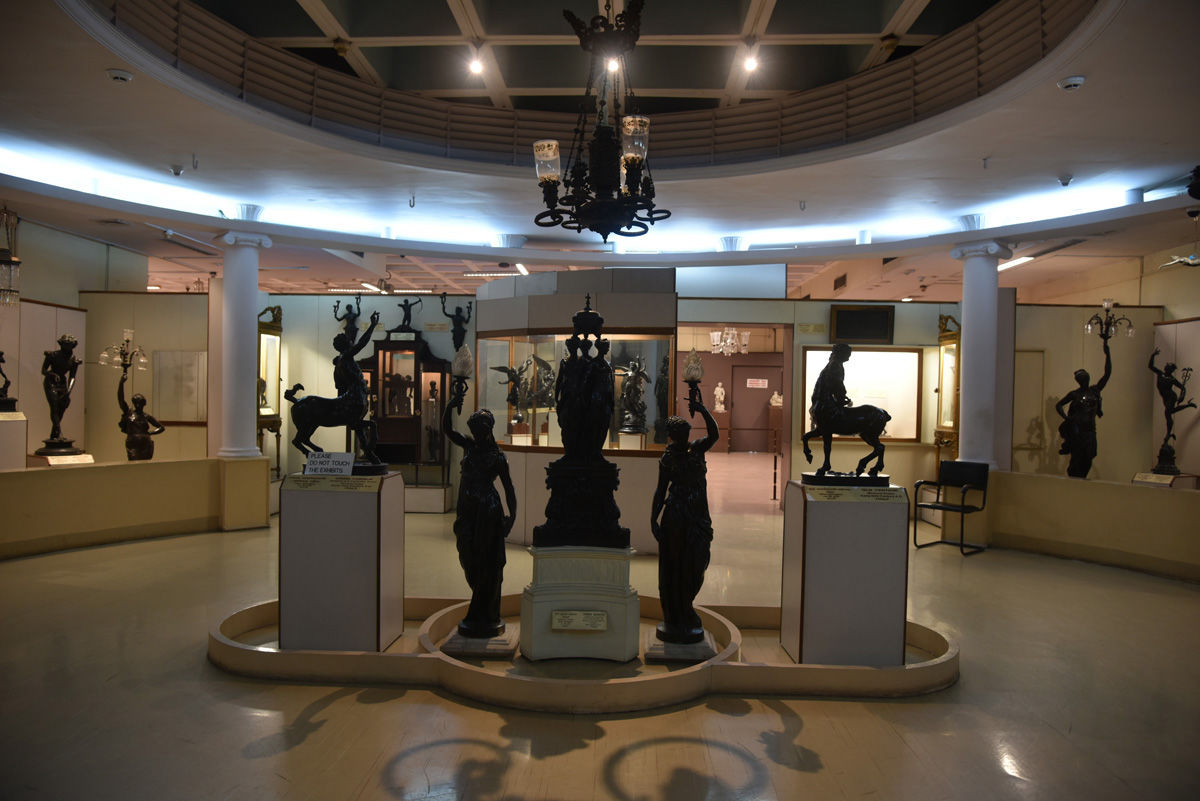
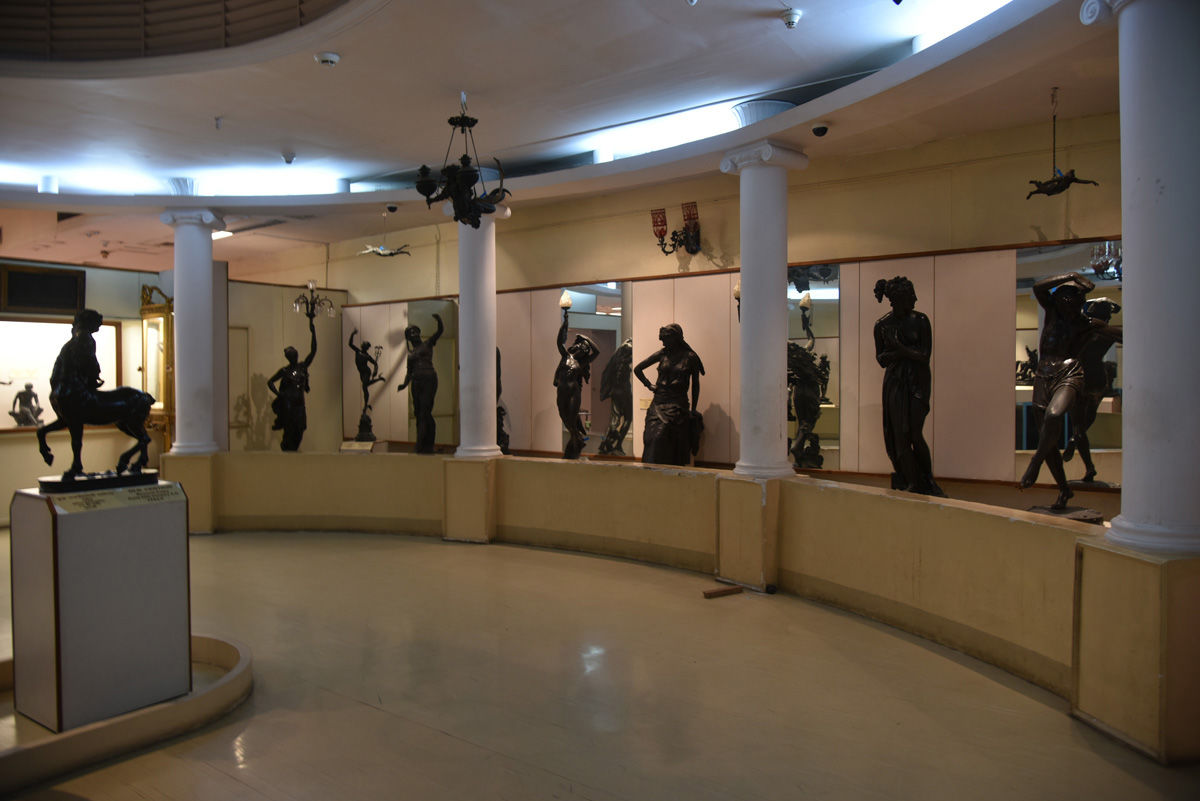
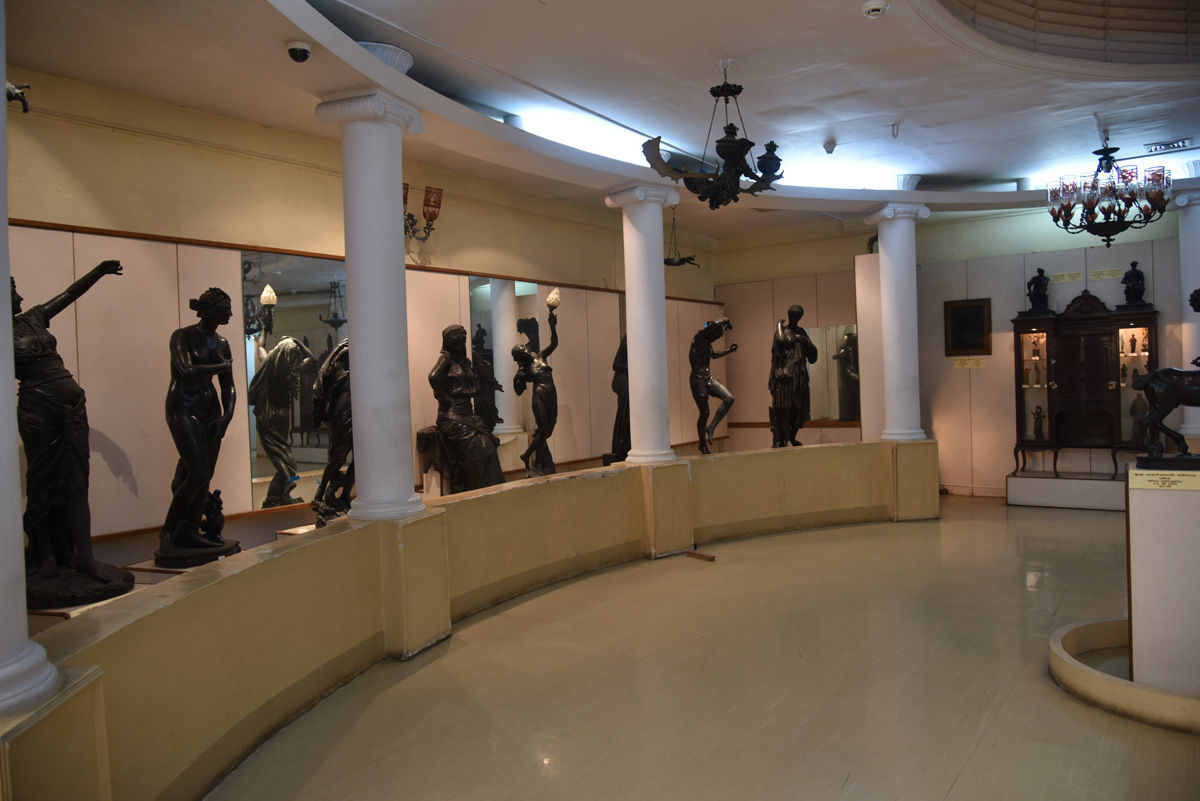
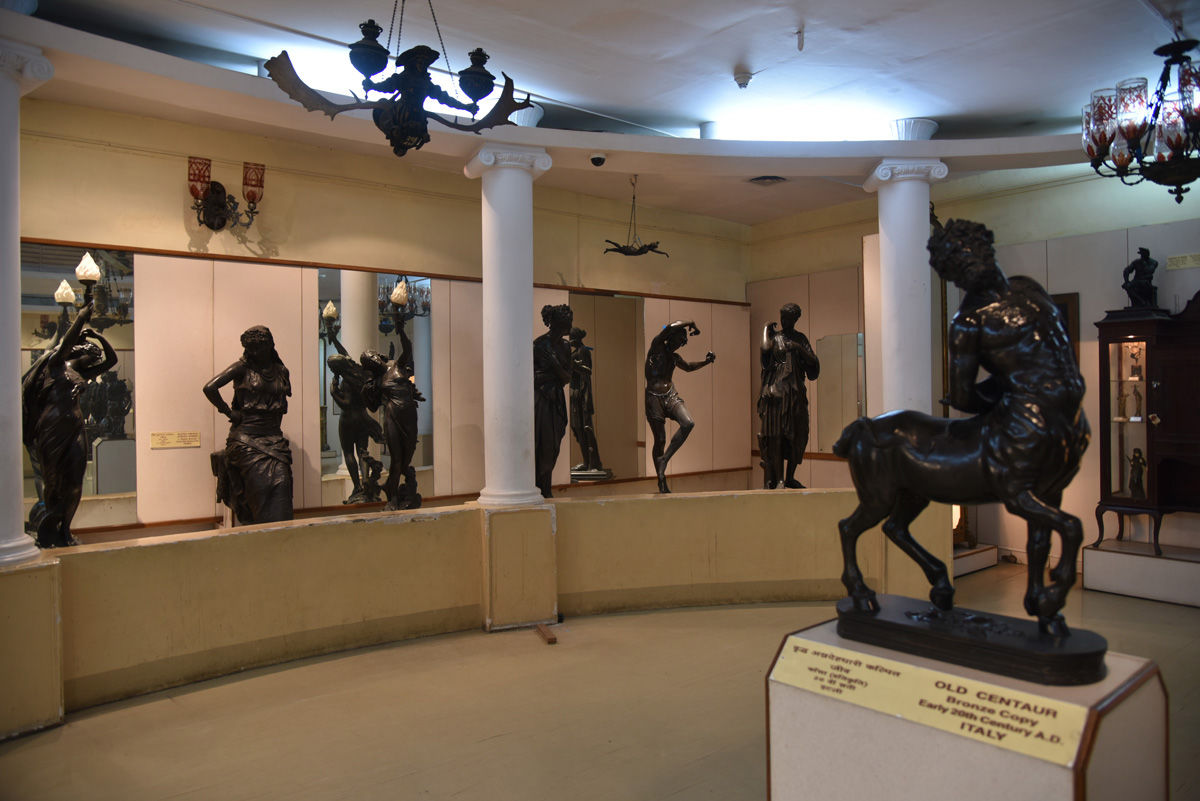
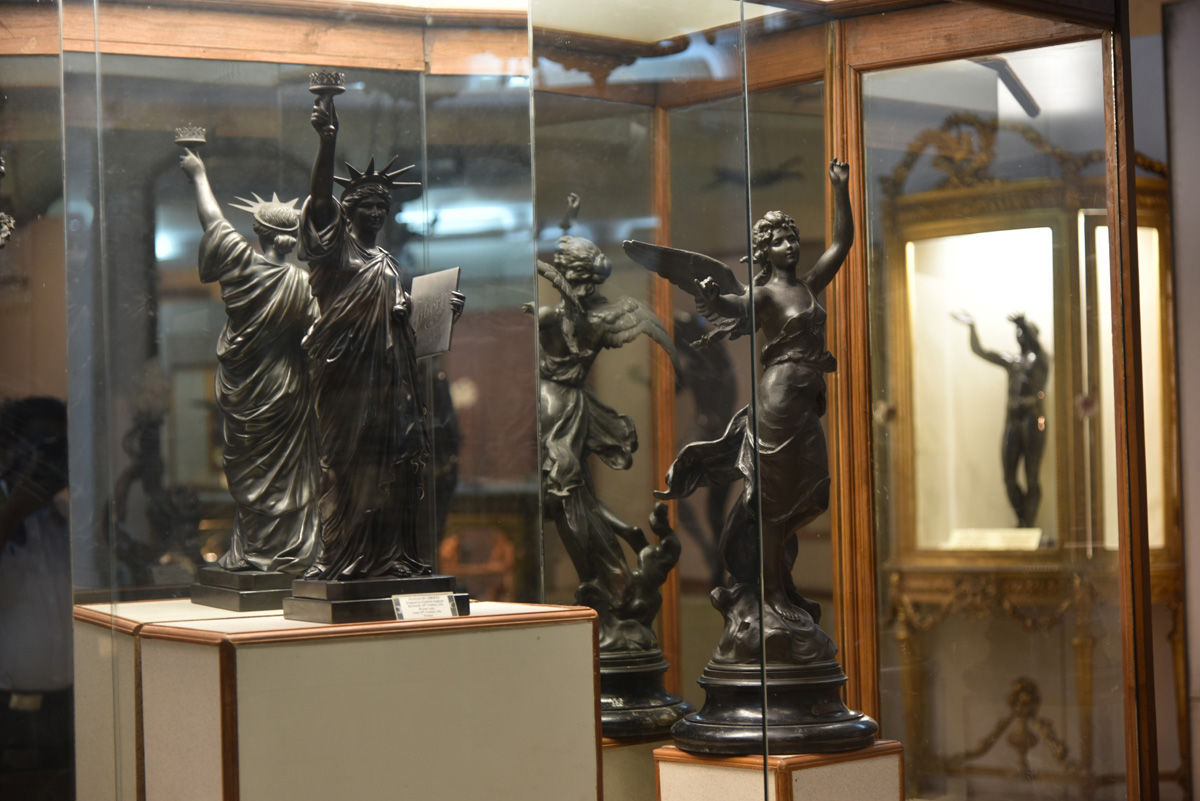
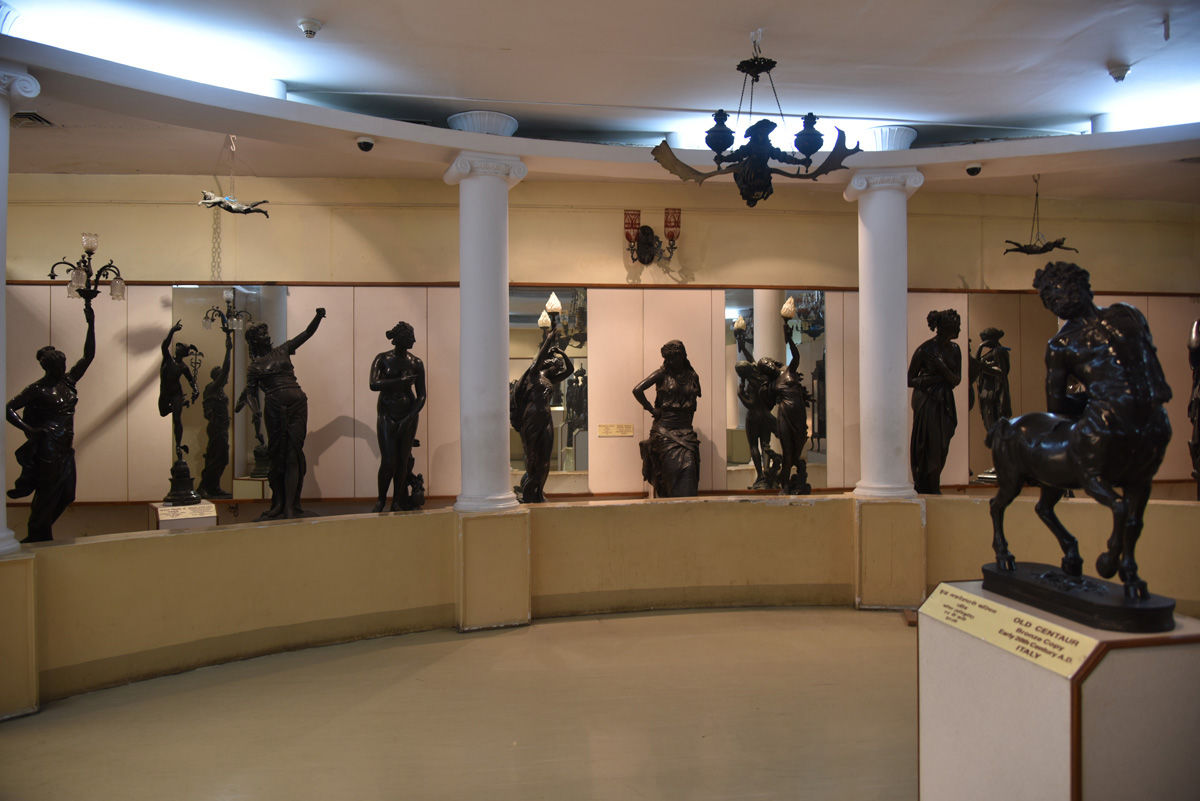
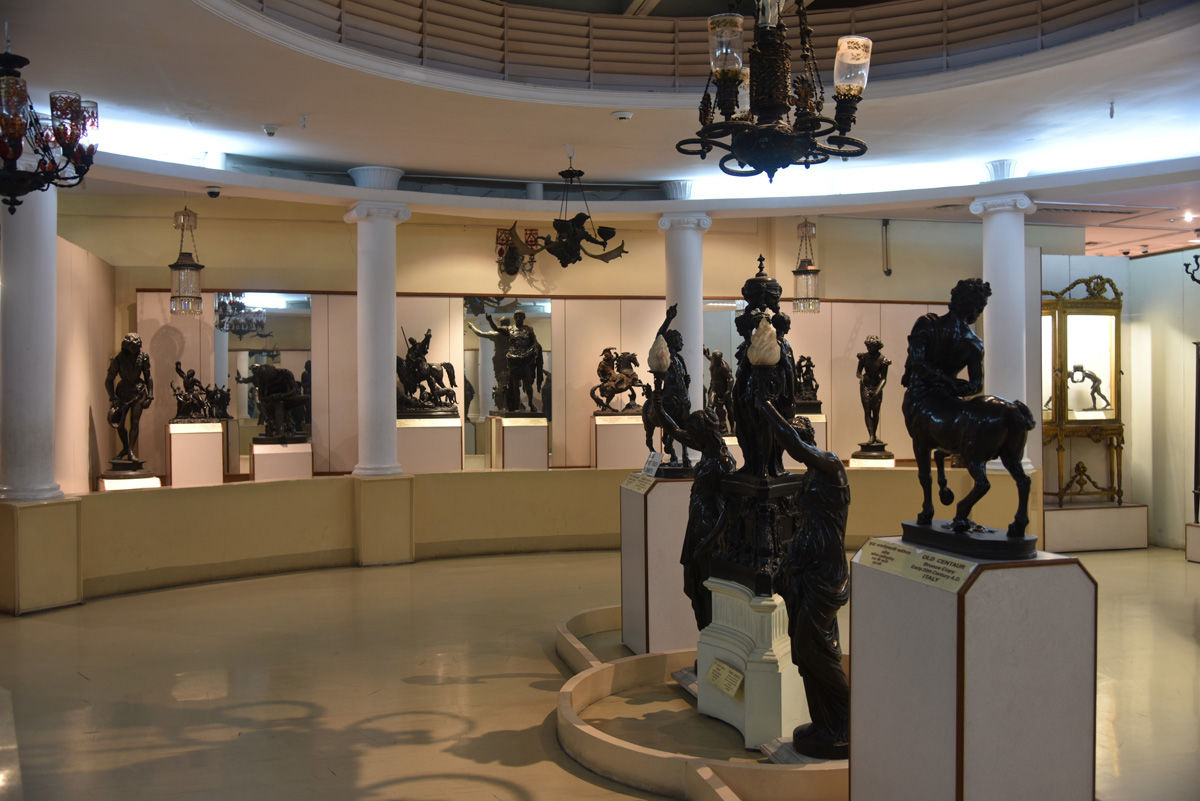
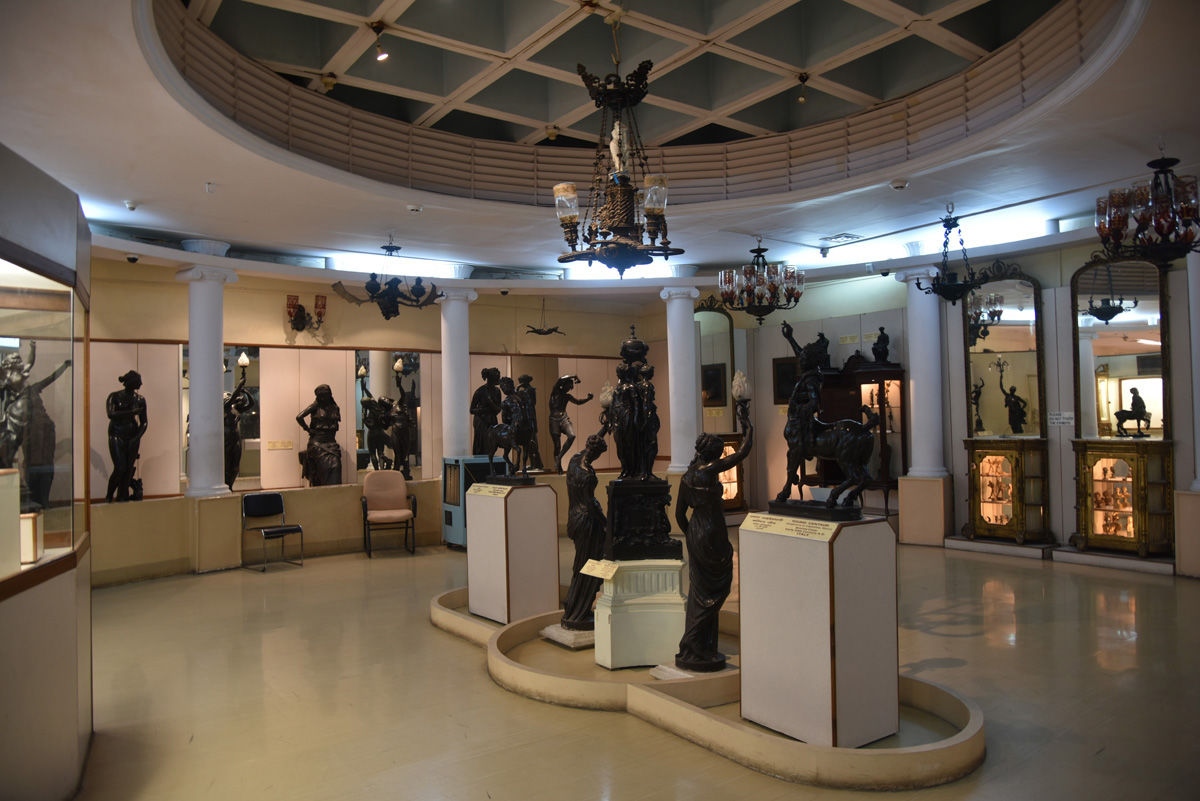
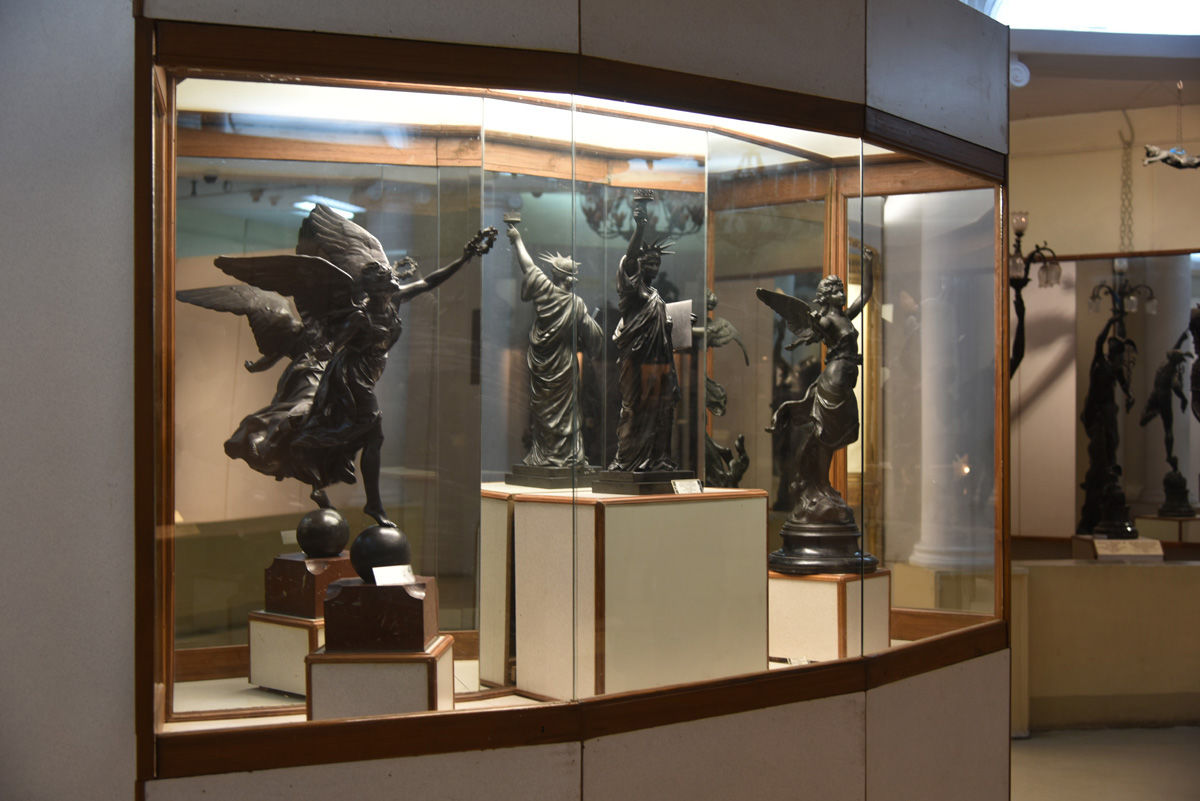
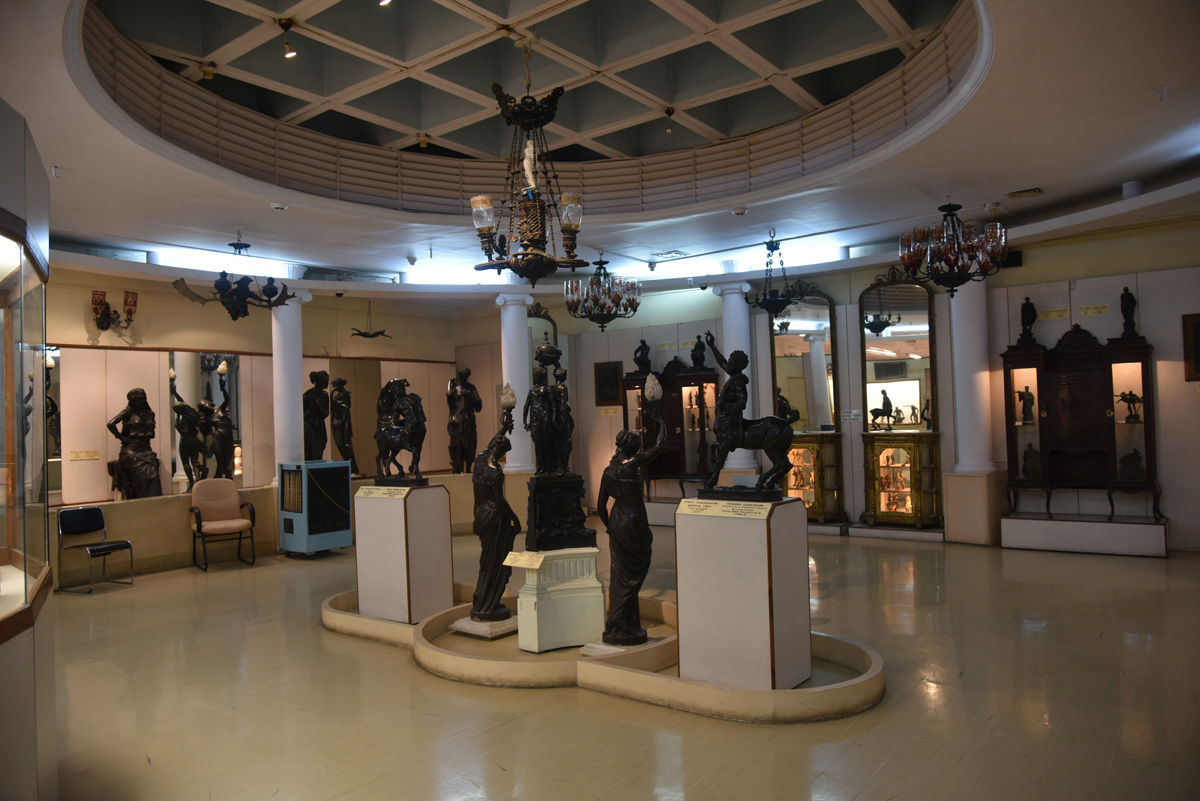
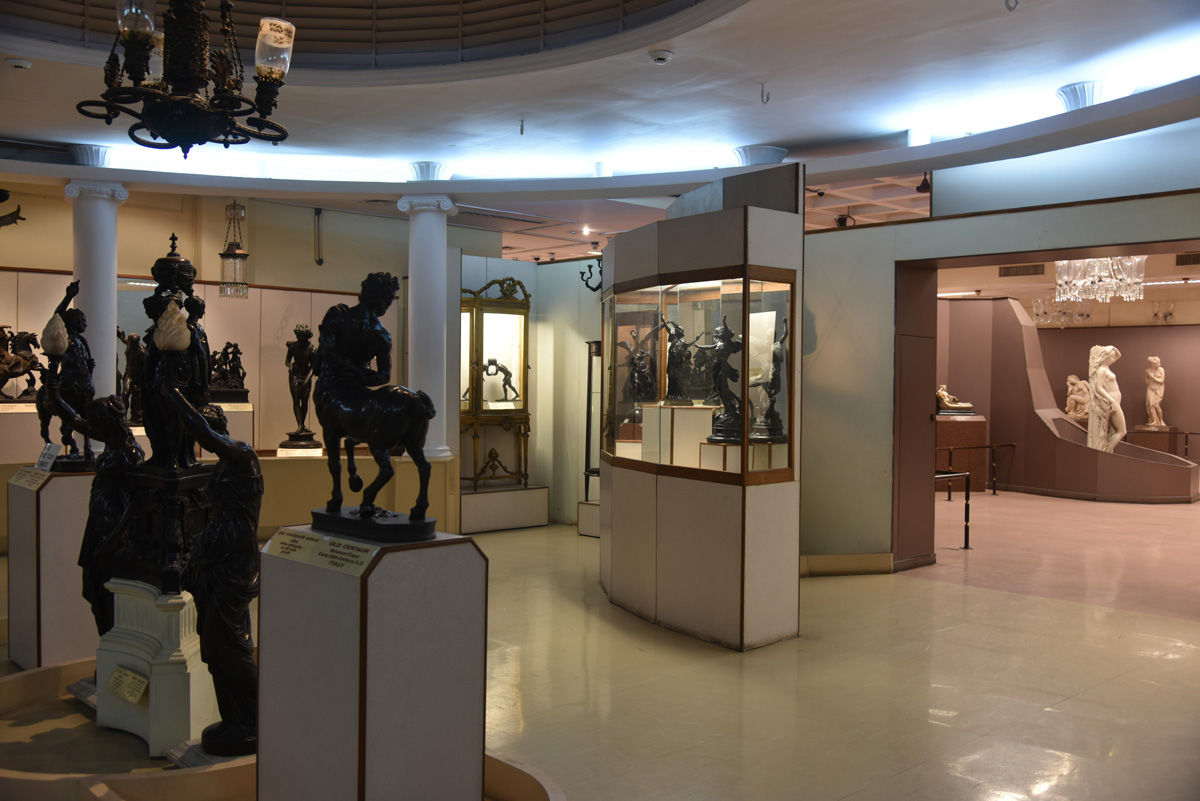
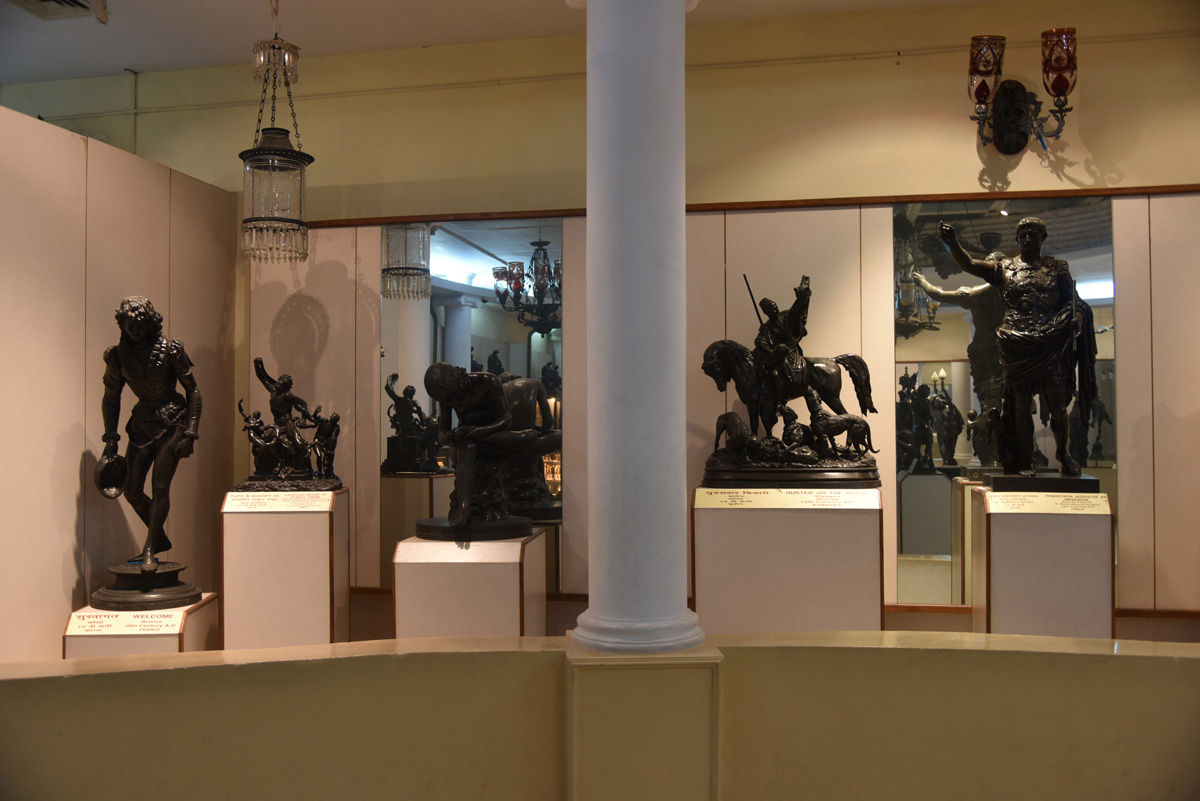
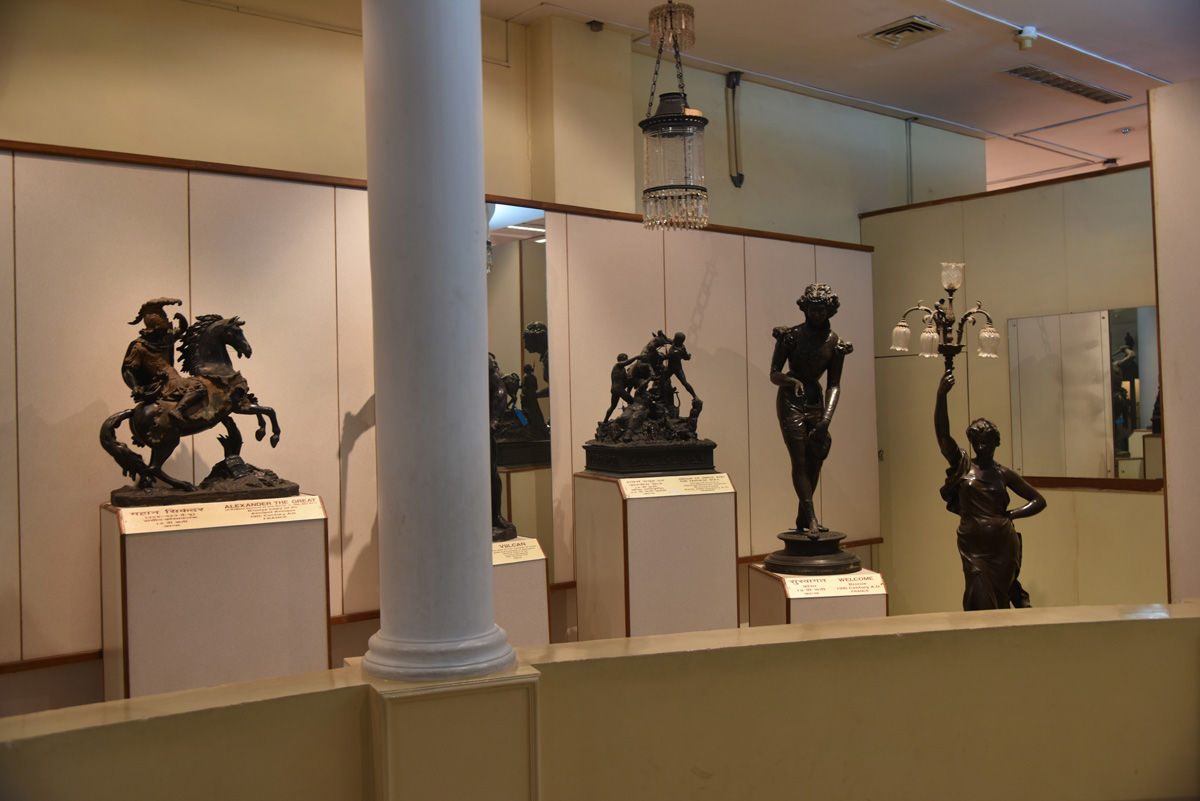
Bronze, an alloy of copper and tin, has been used in Europe since antiquity. It was widely used to produce a variety of objects, particularly sculptures, following the introduction of hollow casting during the sixth century BC. The European bronze sculptures in the museum, most of which are copies of celebrated originals, may be broadly classified into three categories: mythological figures, historical personalities, and literary figures.
Among the mythological sculptures is Laocoön and His Two Sons, a copy of the celebrated Hellenistic masterpiece attributed to the Rhodian sculptors Athenodorus, Agesander, and Polydorus. The date of the original work remains uncertain. (The original omits Agesander, who is traditionally included among the sculptors.) The sculpture depicts the Trojan priest Laocoön and his two sons being attacked by sea serpents, a scene from Greek mythology.
Mercury Resting, a copy after the work attributed to Lysippus, dates stylistically to the third century BC. The sculpture portrays Mercury, the messenger of Jupiter, resting after his exertions. The original was discovered at Herculaneum in 1758 and depicts the youthful deity with refined features and graceful proportions. The Medici Venus, one of the most celebrated representations of Venus, the Roman goddess of beauty, is a copy of the renowned ancient sculpture known as the Medici Venus, attributed to an unknown sculptor.
Among the historical figures is the Bust of Niccolò da Uzzano, inspired by Donatello’s celebrated painted terracotta bust, one of the masterpieces of fifteenth-century Renaissance sculpture. The collection also includes bronze copies of Lorenzo de’ Medici and Giuliano de’ Medici, whose original marble sculptures were created by Michelangelo (1475–1564). (Avoid informal phrases such as “the one and only”.) The collection also includes a bronze replica of Moses, the revered lawgiver of the Jewish people. The original marble sculpture was created by Michelangelo and is regarded as one of the masterpieces of Renaissance art.
The collection concludes with bronze sculptures of distinguished literary figures, including Dante Alighieri, author of Inferno; William Shakespeare, the renowned English playwright; Jean de La Fontaine, the seventeenth-century French poet and fabulist; and Molière, the celebrated seventeenth-century French playwright and master of satirical comedy.