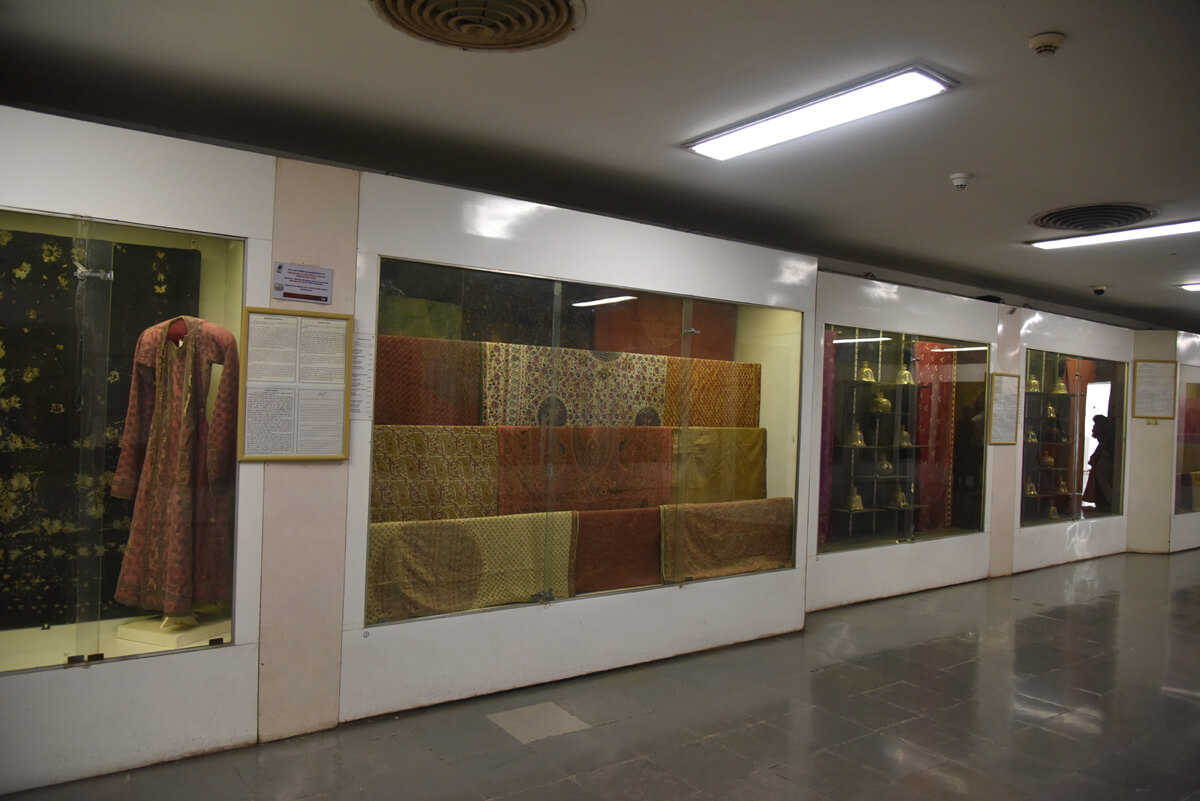
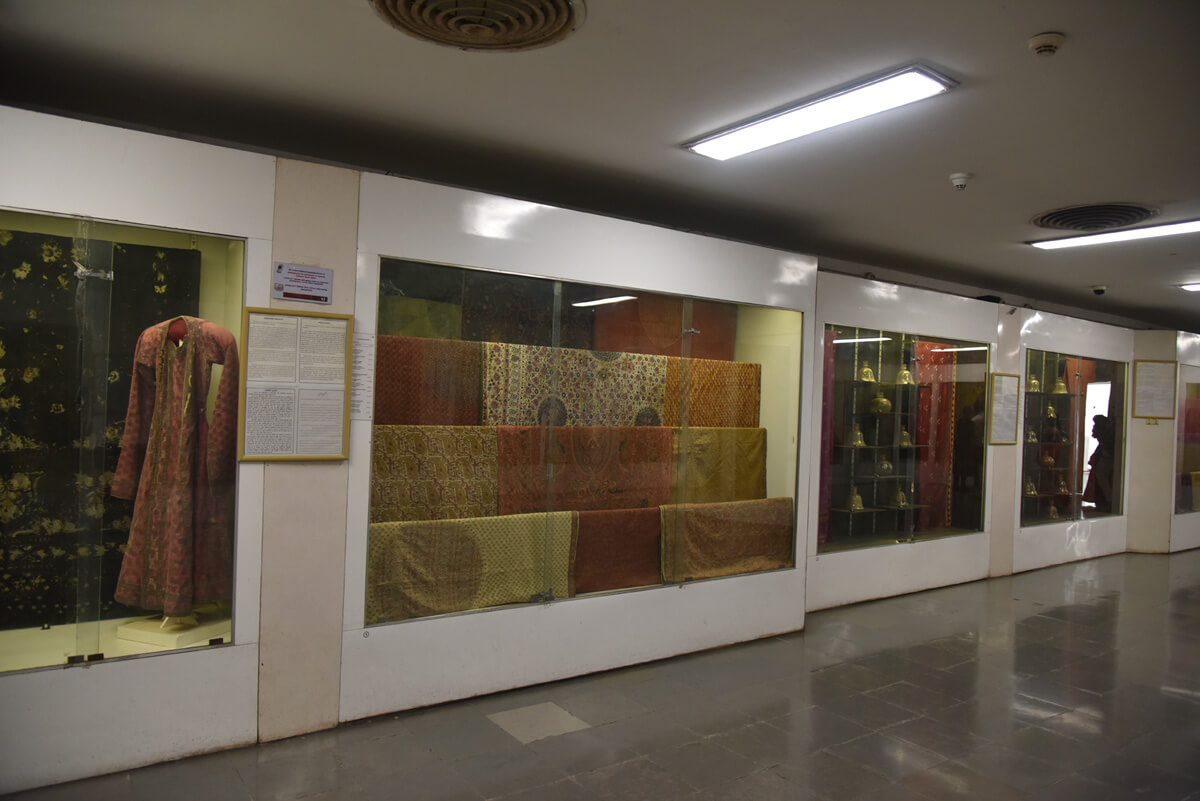
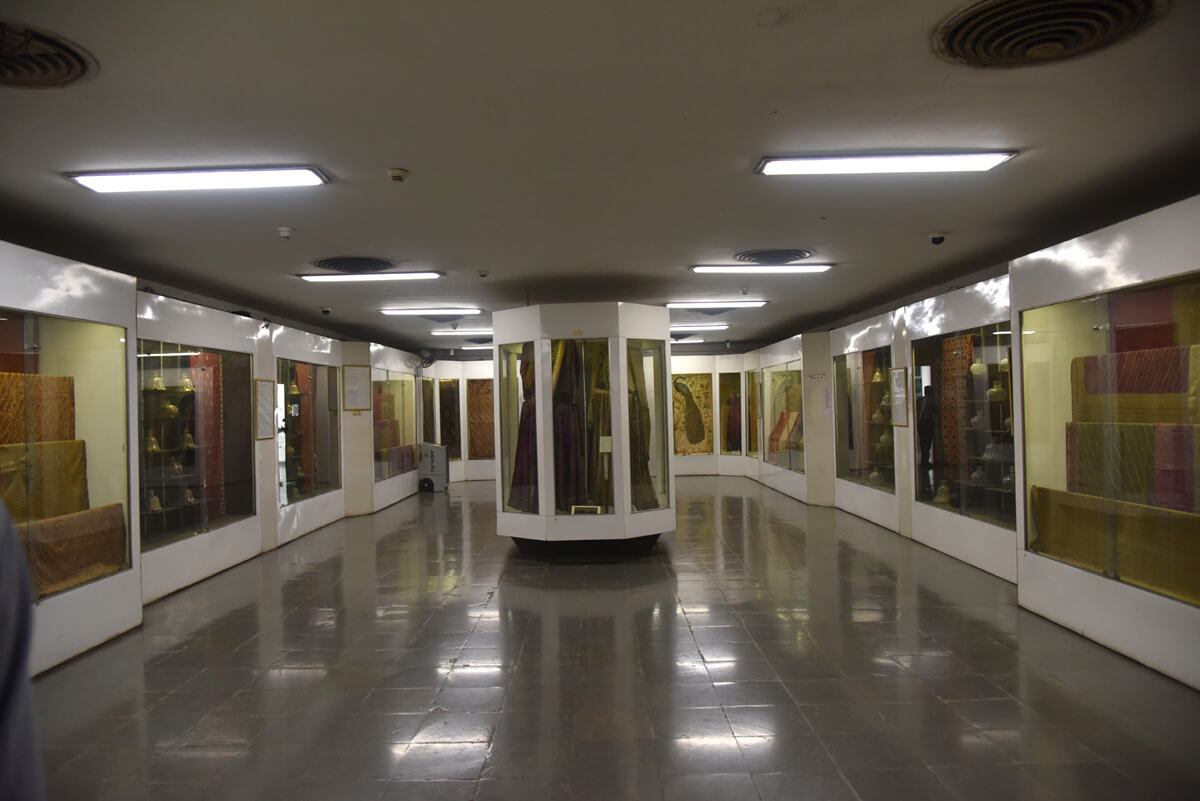
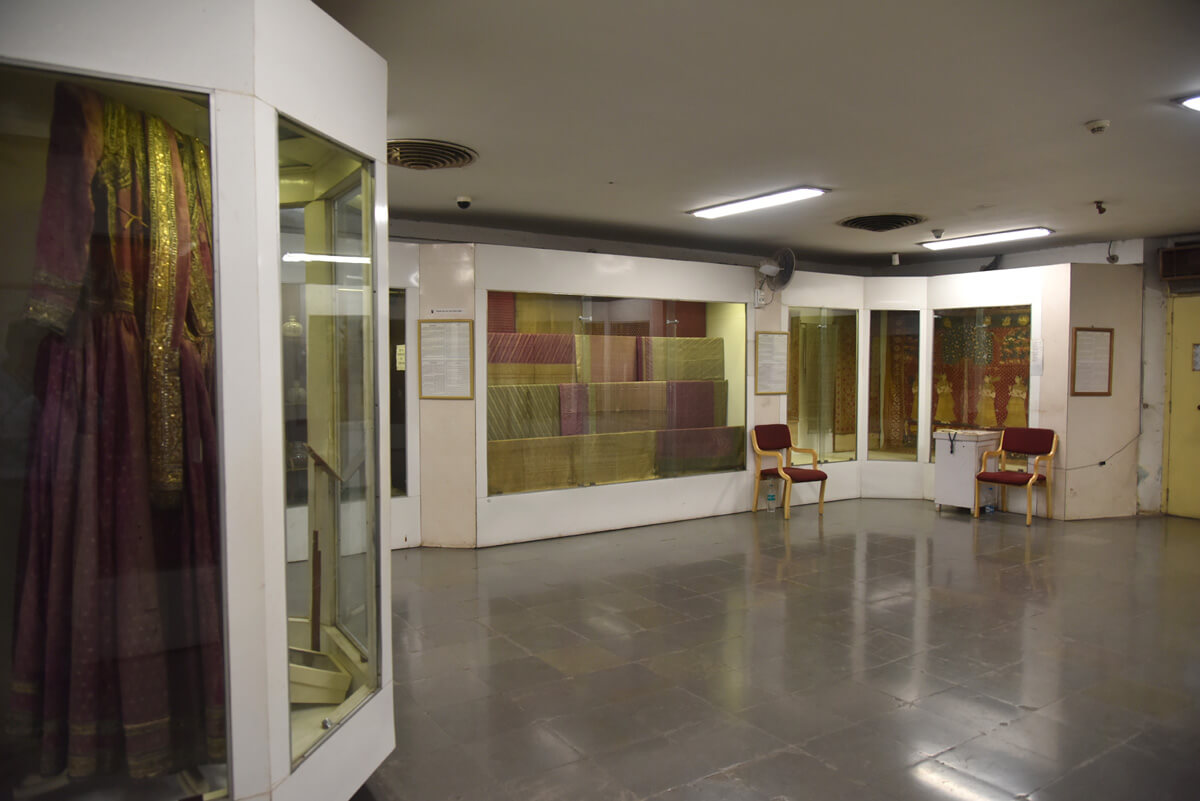
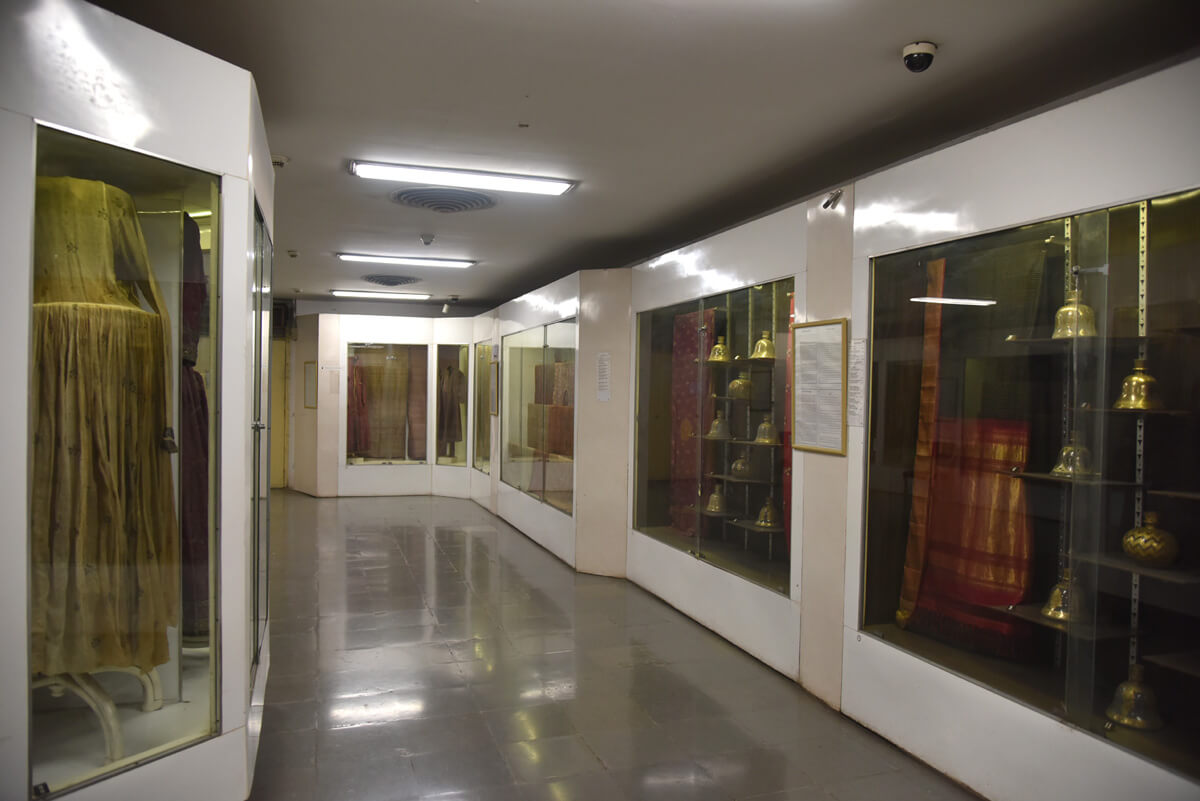
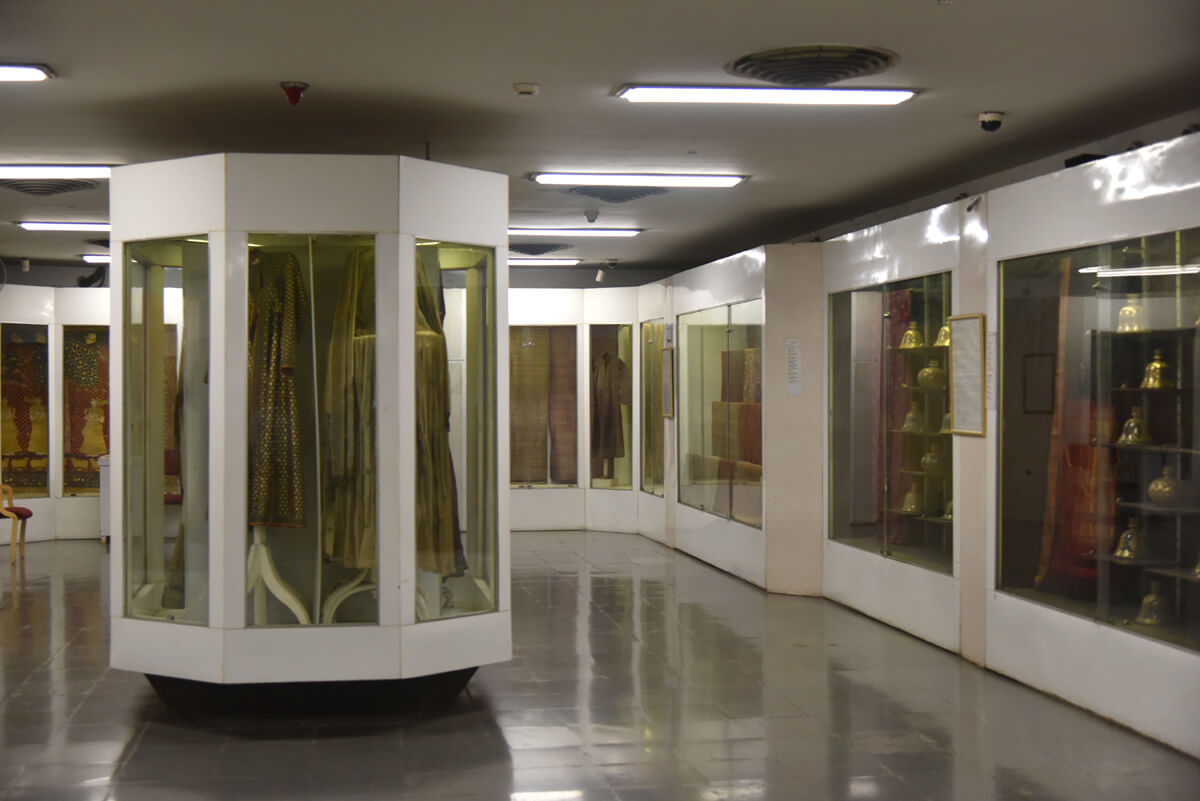
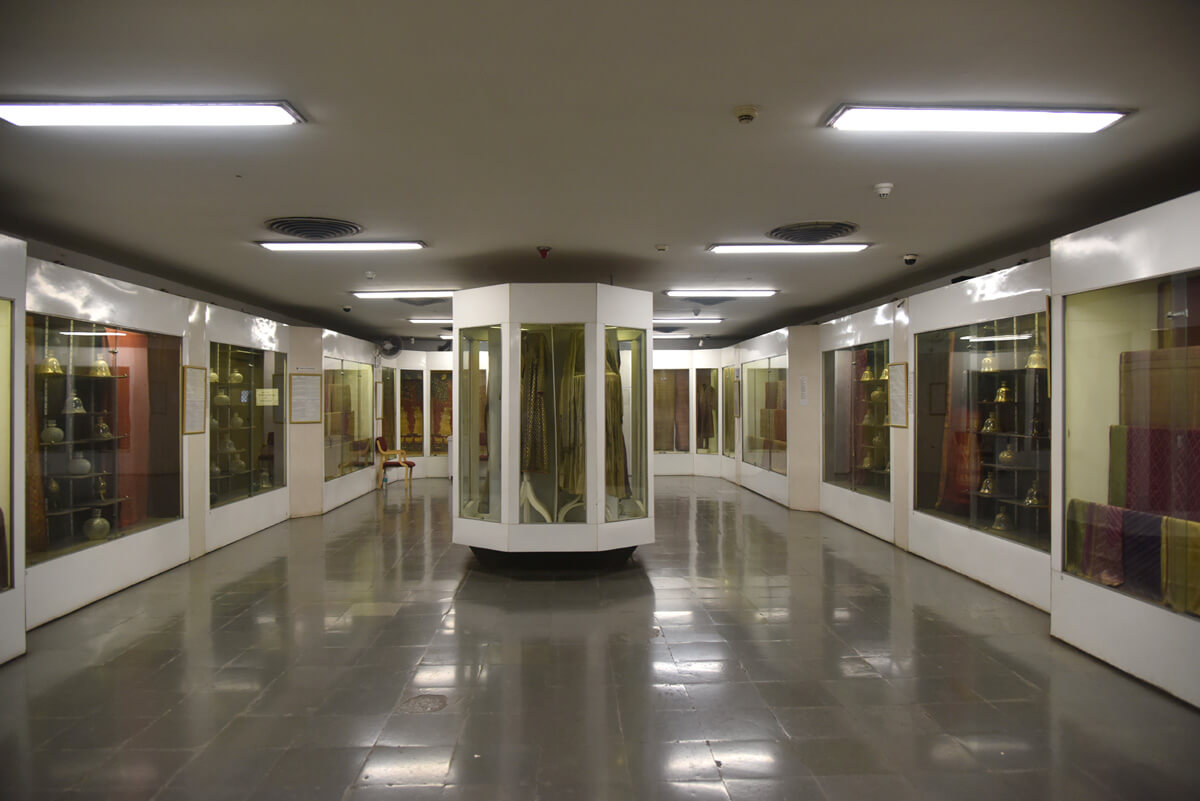
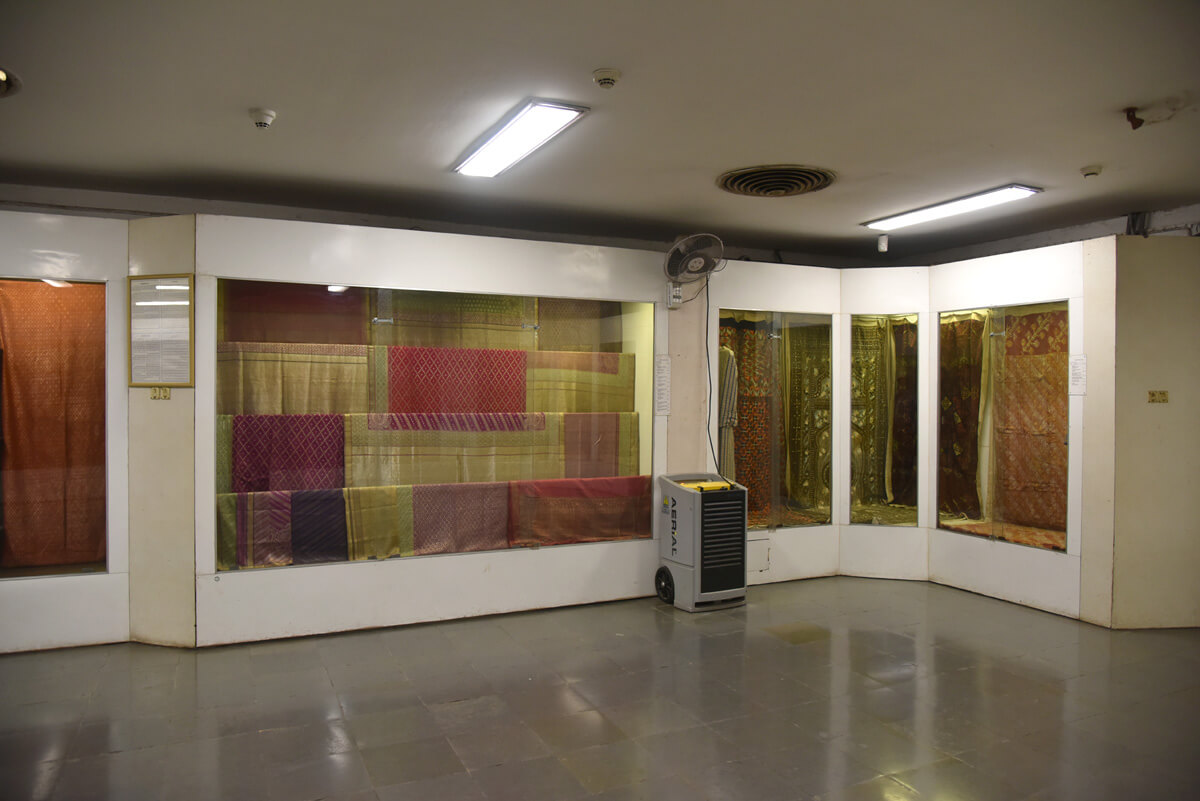
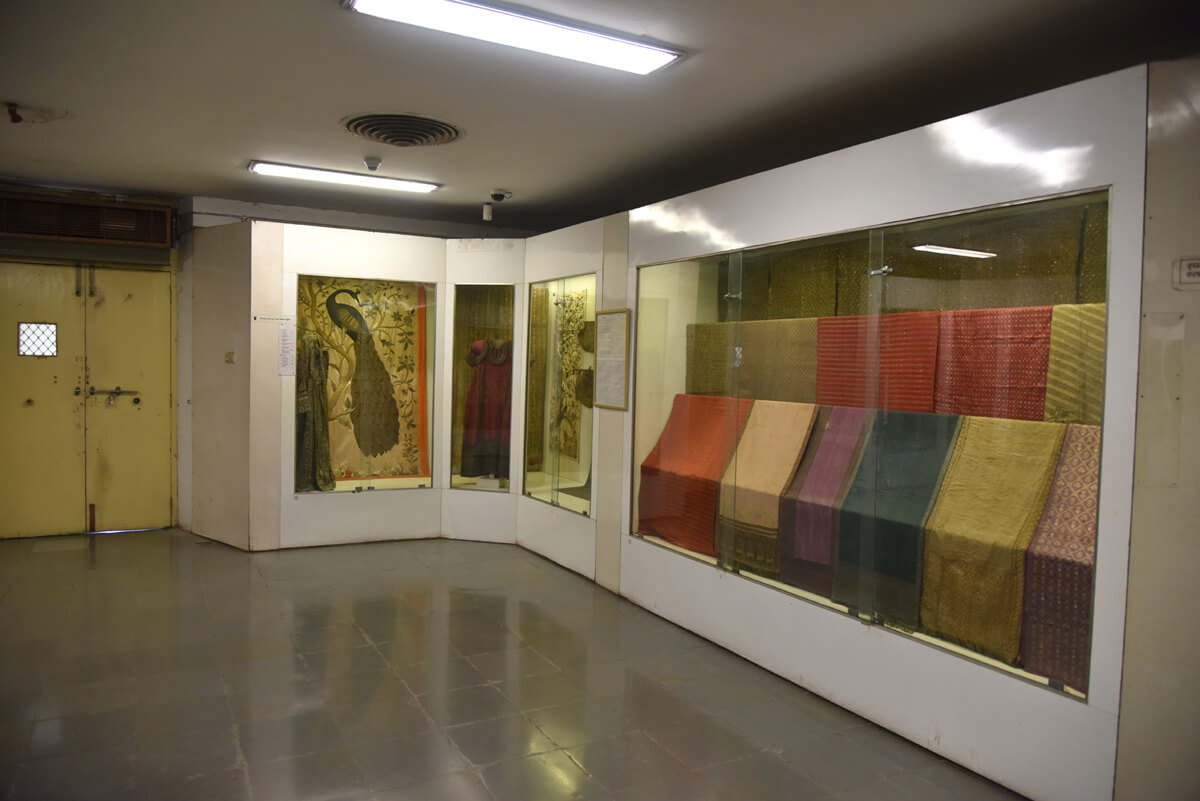
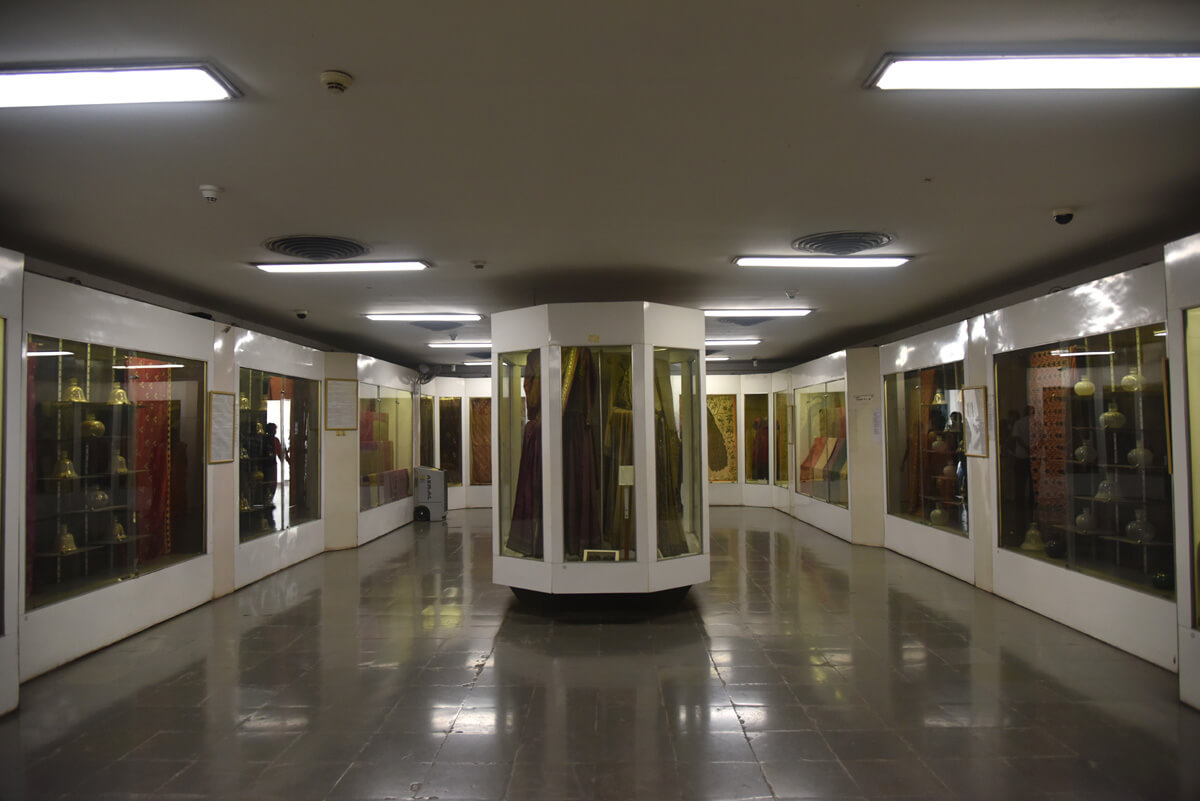
India is celebrated throughout the world for its rich and diverse textile traditions. This tradition dates back to the Indus Civilisation (Sindhu Saraswati Sabhyata), where evidence of cotton was discovered during excavations at Mohenjo-daro. The Indian Textiles Gallery introduces visitors to India’s rich textile heritage through a diverse collection of fabrics, costumes, and associated objects dating from the last three centuries.
In addition to cotton, the gallery displays a variety of textiles and decorations, including brocade, Himru, Mashru, muslin, silk, velvet, and wool. (Verify whether “Himaru” should be “Himru”.) The collection includes a wide range of traditional garments and accessories, including pagdis, safas, chogas, jamas, patkas, kamarbands, saris, odhanis, and shawls. The display is complemented by Mughal-period huqqah bases, which add variety and historical context to the gallery.
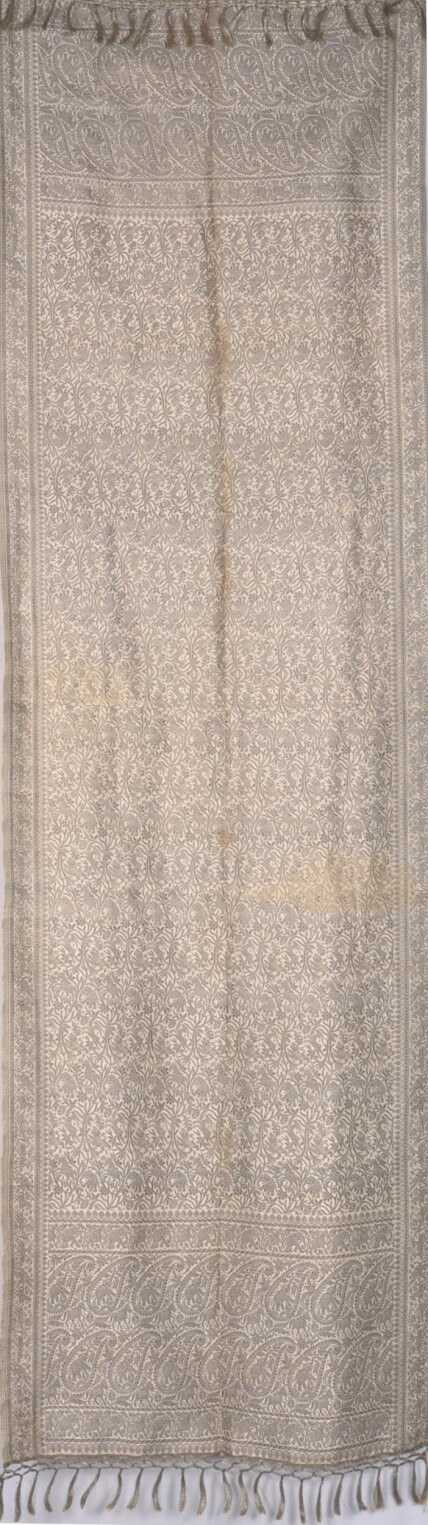
The Museum houses an outstanding collection of Kashmiri shawls dating from the 18th and 19th centuries. These shawls exemplify the exceptional craftsmanship of the Kashmiri textile tradition, which has earned international recognition. The shawls on display showcase intricate weaving, vibrant colours, and refined decorative patterns. The Turanj pattern is a distinctive decorative motif found in Kashmiri shawls. Four examples are displayed in the gallery, three of which feature this elegant motif as a border.
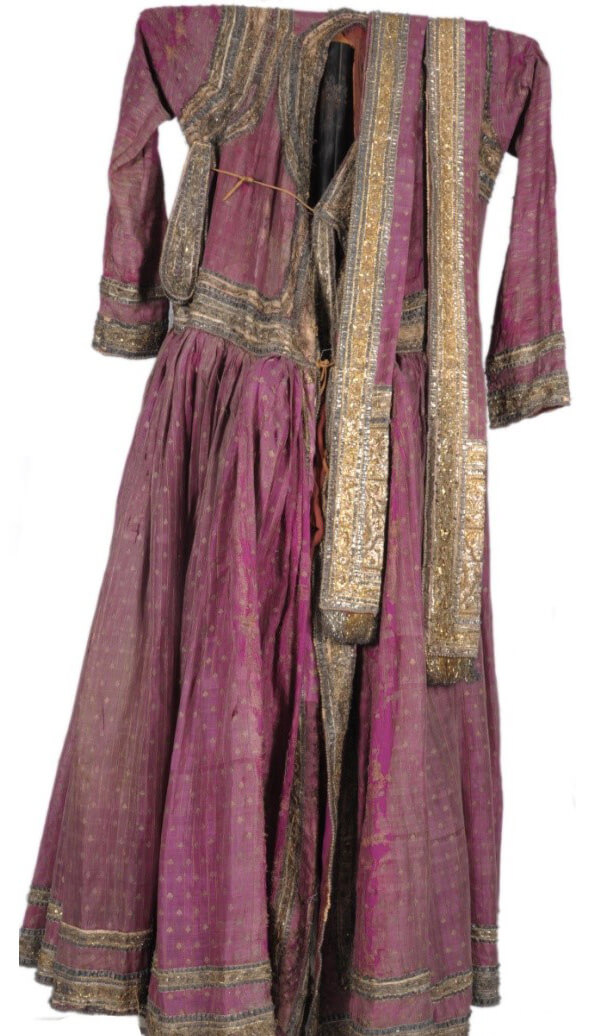
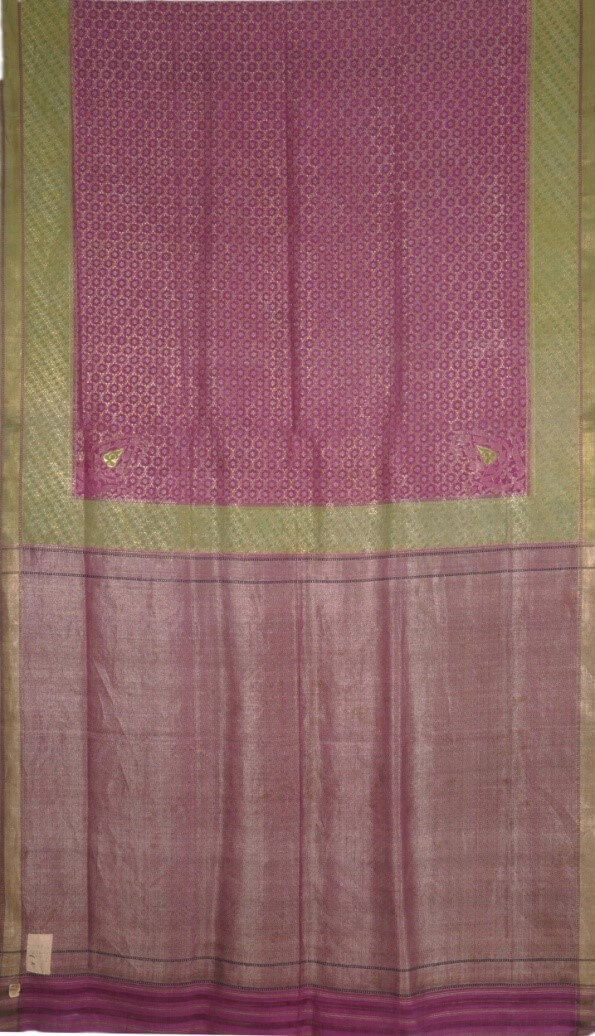
The museum also possesses an exceptional collection of brocades. The collection includes an extensive range of saris, dupattas, and odhanis. The gallery also features an extensive collection of costumes. Among its highlights is a nineteenth-century muslin Char Jama accompanied by a waistcoat decorated with fine embroidery. (Verify whether “Meenakari embroidery” is correct, as meenakari generally refers to enamelling rather than embroidery.) Another highlight is a large angarkha richly decorated with floral motifs and elaborate zari embroidery, making it one of the gallery’s most striking exhibits.