
Explore Museum
The Origin:
The Salar Jung Museum in Hyderabad stands as a testament to the Salar Jung family’s connoisseurship of art. The Museum was officially opened to the public by the first Prime Minister of India, Pandit Jawaharlal Nehru, on 16th December 1951.
Located on the southern bank of the Musi River in Hyderabad, Telangana, the Salar Jung Museum is one of the largest museums in the world and the third-largest in India.
About the Museum
Partners & Collaborations
Public Information
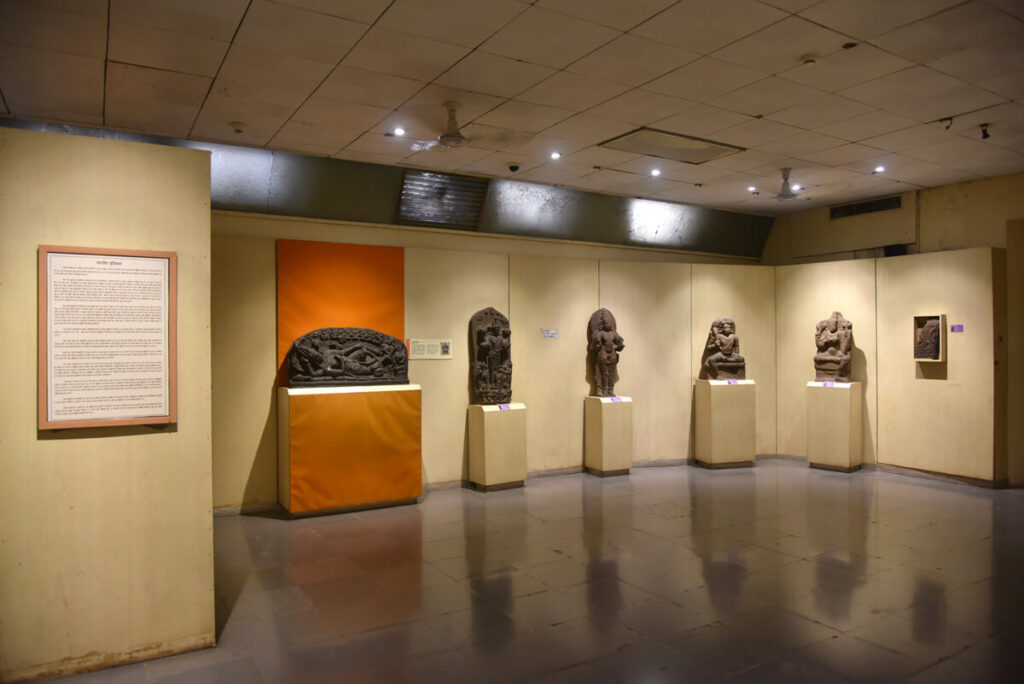
Repository of sculptural masterpieces
The Salar Jung Museum houses a glorious collection of masterpieces from diverse European, Asian, and East Asian cultures, collected primarily by Nawab Mir Yousuf Ali Khan, popularly known as Salar Jung III. His penchant for art manifested into a zeal for collecting, a tradition continued by the Salar Jung family for three generations.
The collection features the ‘Veiled Rebecca’, an exquisite marble statue acquired by Salar Jung I from Rome, and a set of ivory chairs gifted by Louis XVI of France to Tipu Sultan of Mysore. The museum is adorned with a jade book-stand (‘Rehal’) bearing the name of Shamsuddin Iltutmish, and an archer’s ring inscribed with the title of the Mughal Emperor, Shah Jahan: ‘Sahib-i-Qiran-i-Thani’. The collection also includes a jade dagger and a fruit knife embellished with precious stones, said to have belonged to Jahangir and Nur Jahan, respectively.
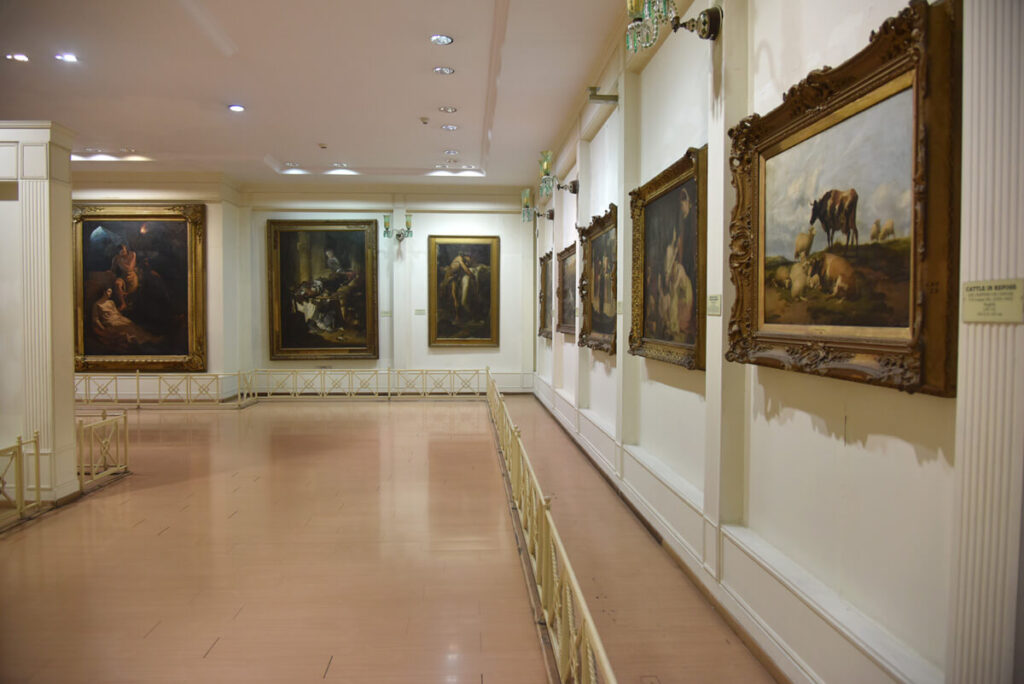
The Salar Jung Museum also boasts a number of marvellous Indian miniature paintings, alongside Arabic and Persian manuscripts from the 19th century, including the ‘Shahnameh’ by Firdausi.
Timeless keepers of time
One of the most visited sections is the clock room, which features a range of timepieces, from ancient sundials in the form of obelisks to large, modern clocks curated from European countries such as France, England, Switzerland, Germany, and the Netherlands. The collection includes bird-cage, bracket, grandfather, and skeleton clocks. The most unique item is the musical clock that Salar Jung III purchased from Cook and Kelvey of England. Every hour, a figure emerges from the upper deck of the clock to strike a gong corresponding to the hour of the day.
The Museum houses many other interesting objects as well. The Western, Eastern and Central blocks showcase the various arts of Europe, China, Japan, Nepal, Myanmar, Middle East and India.