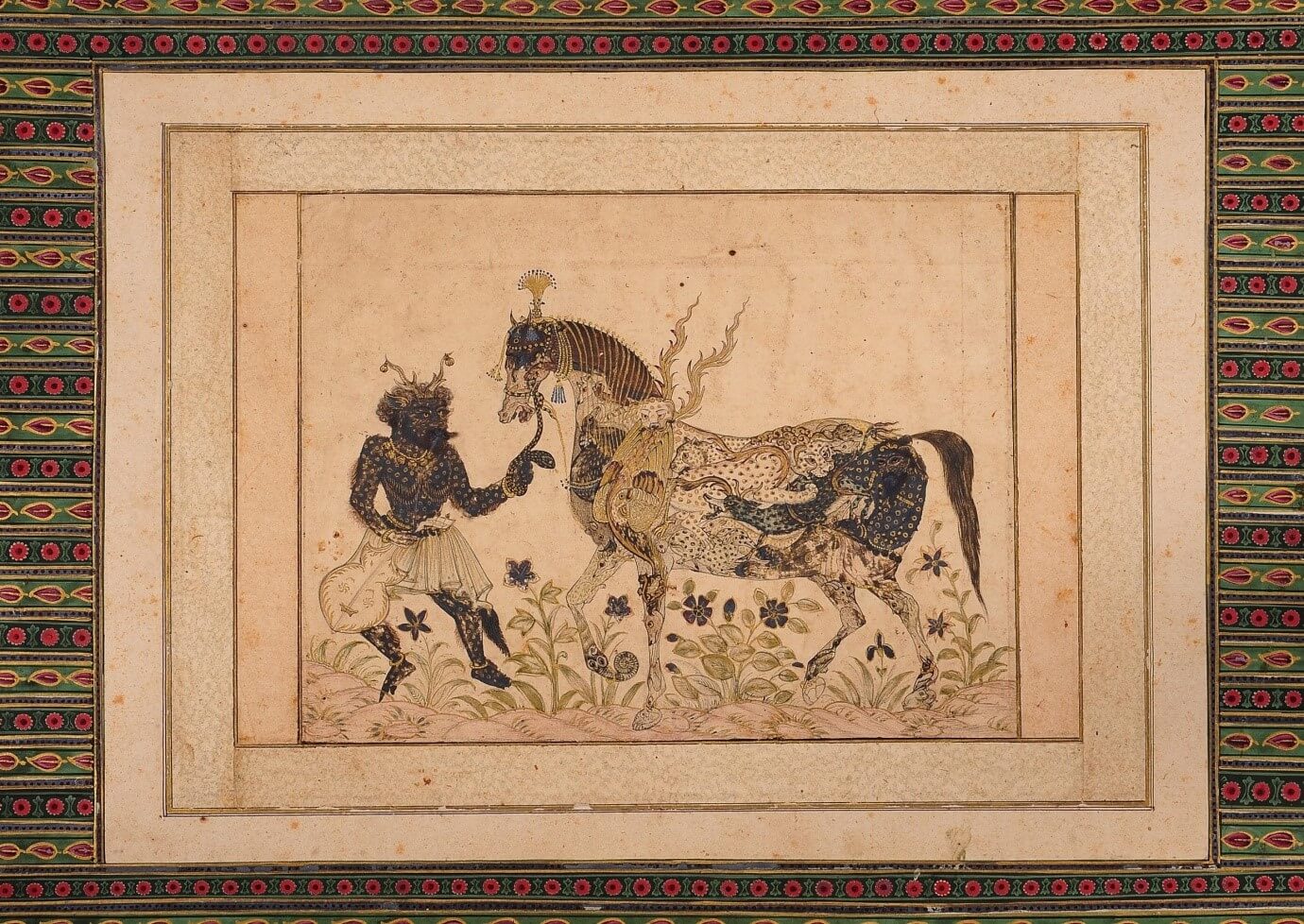
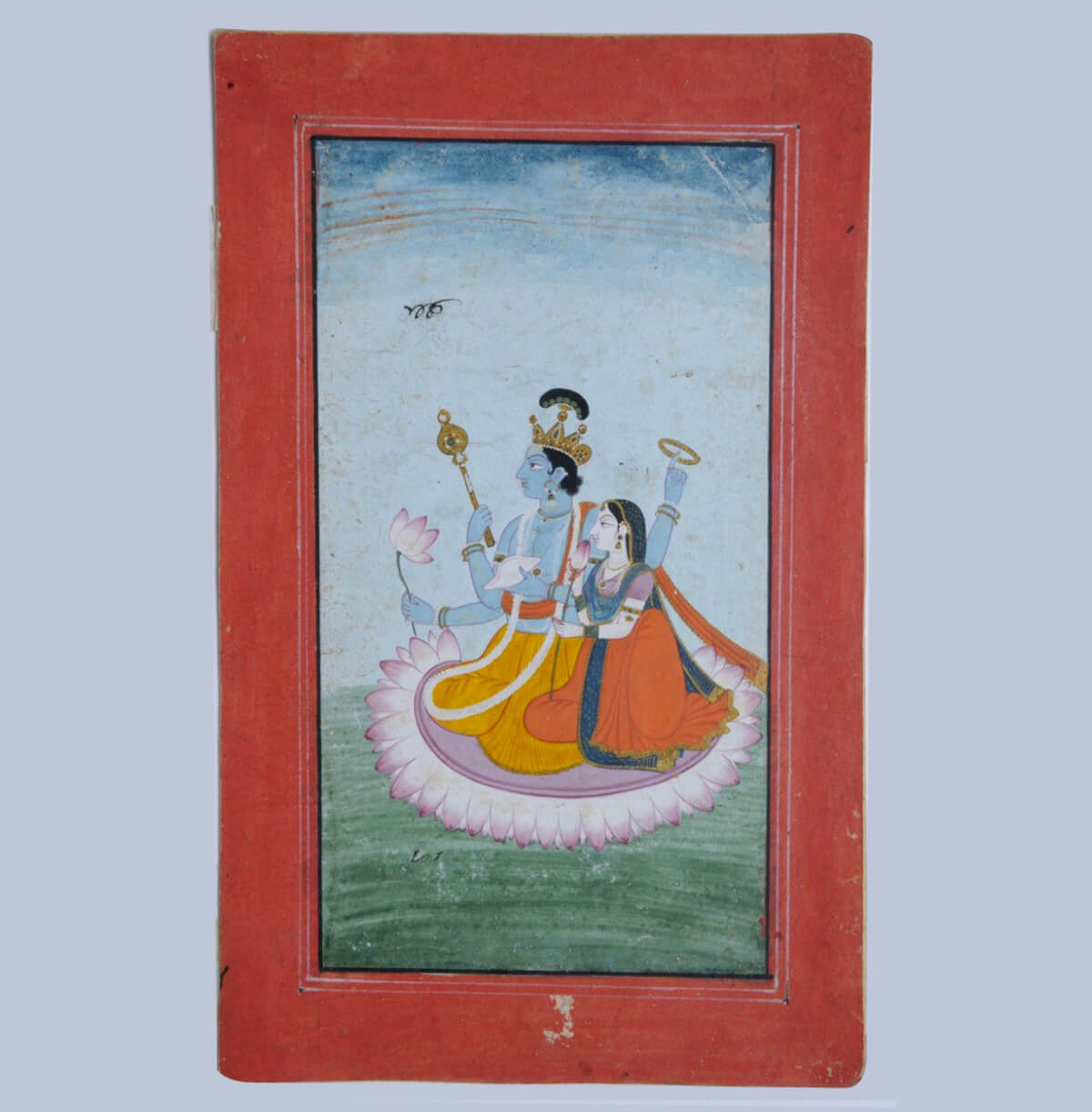
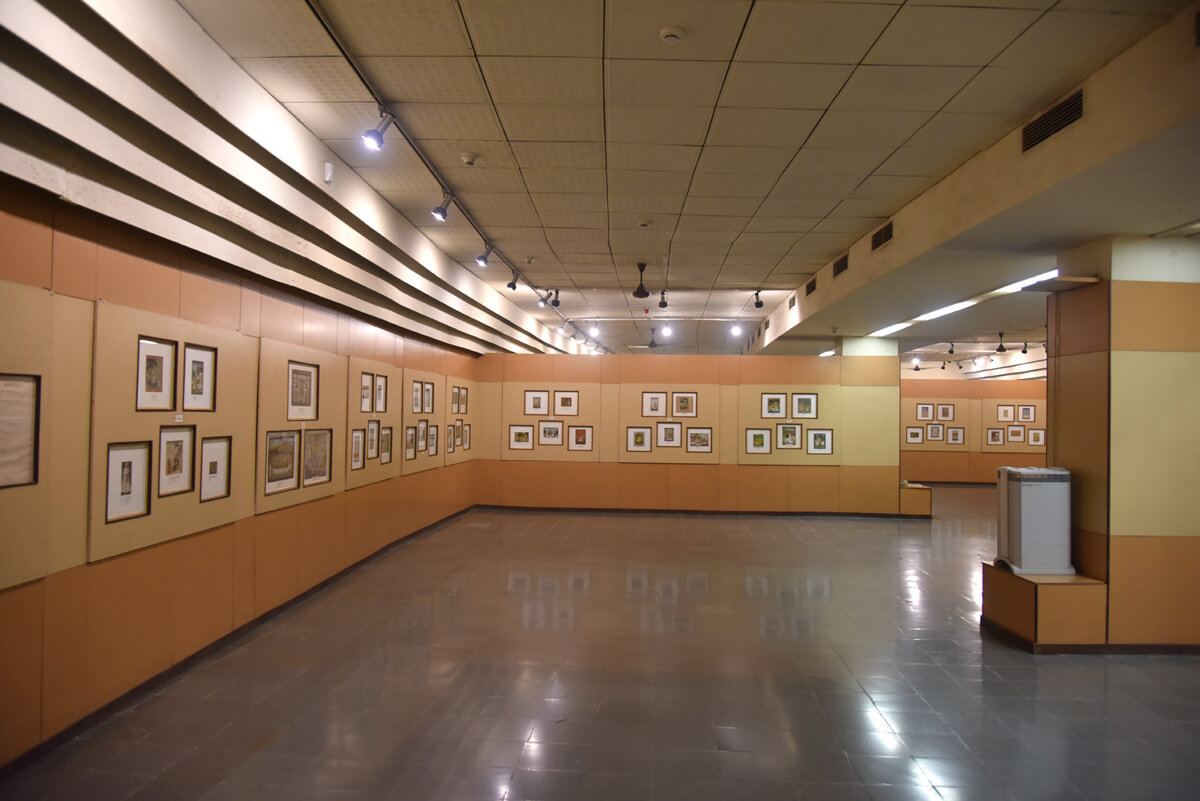
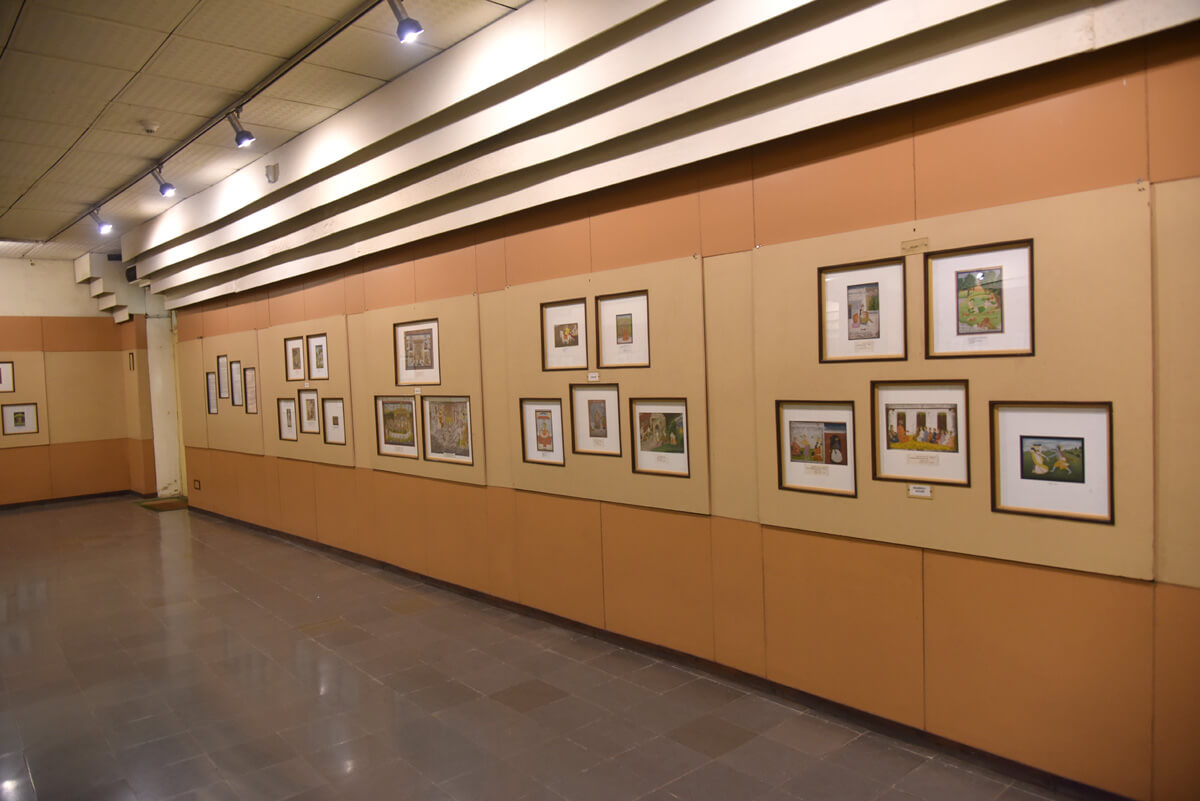
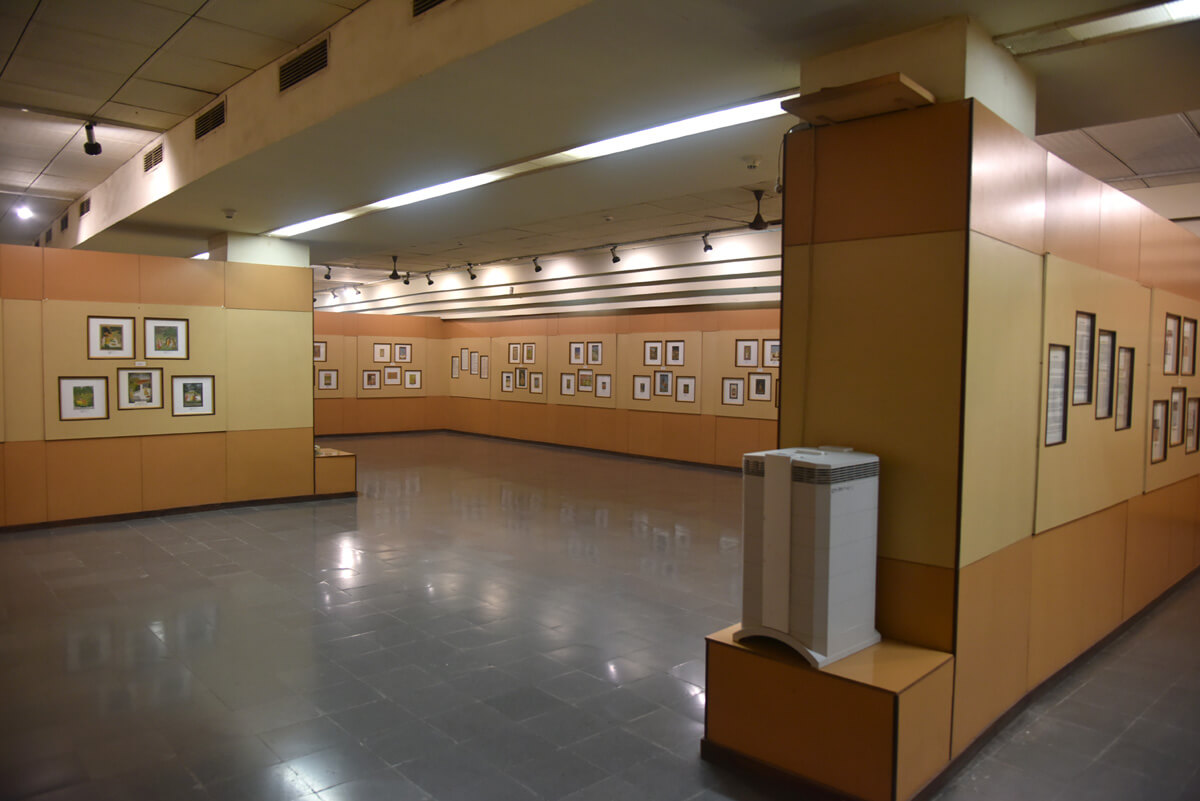
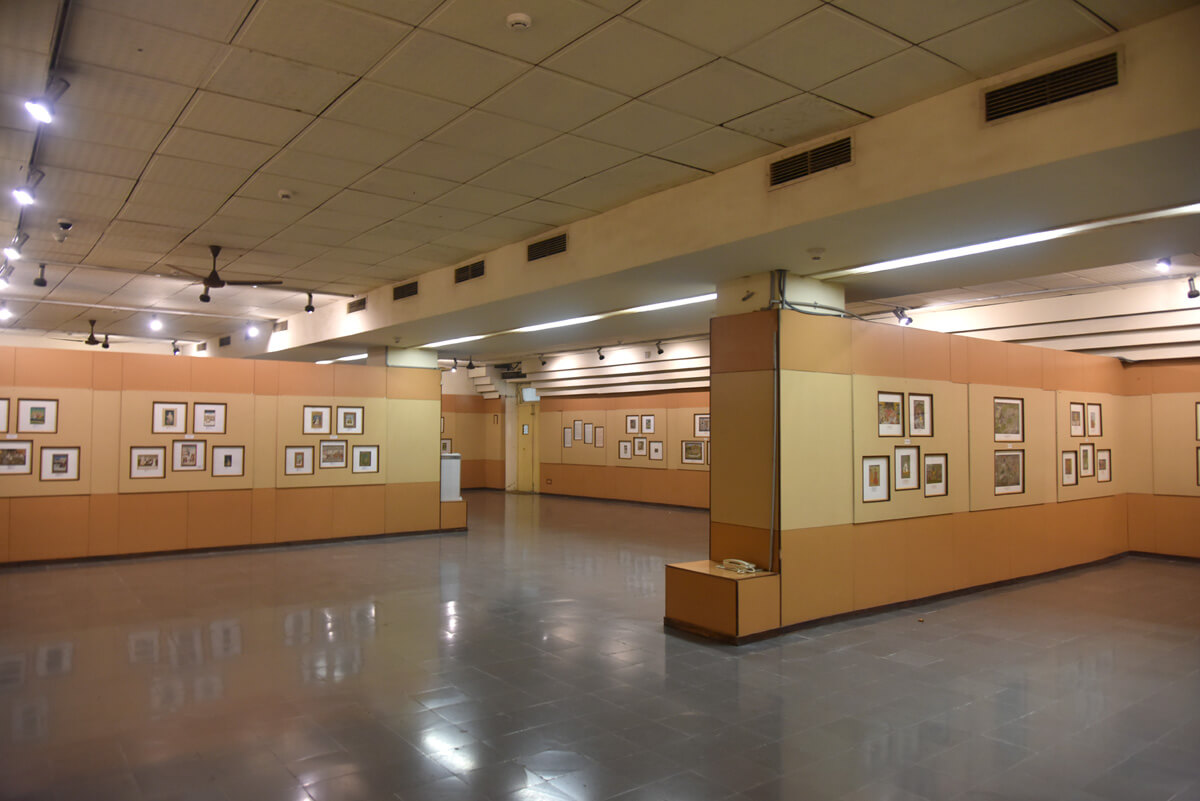
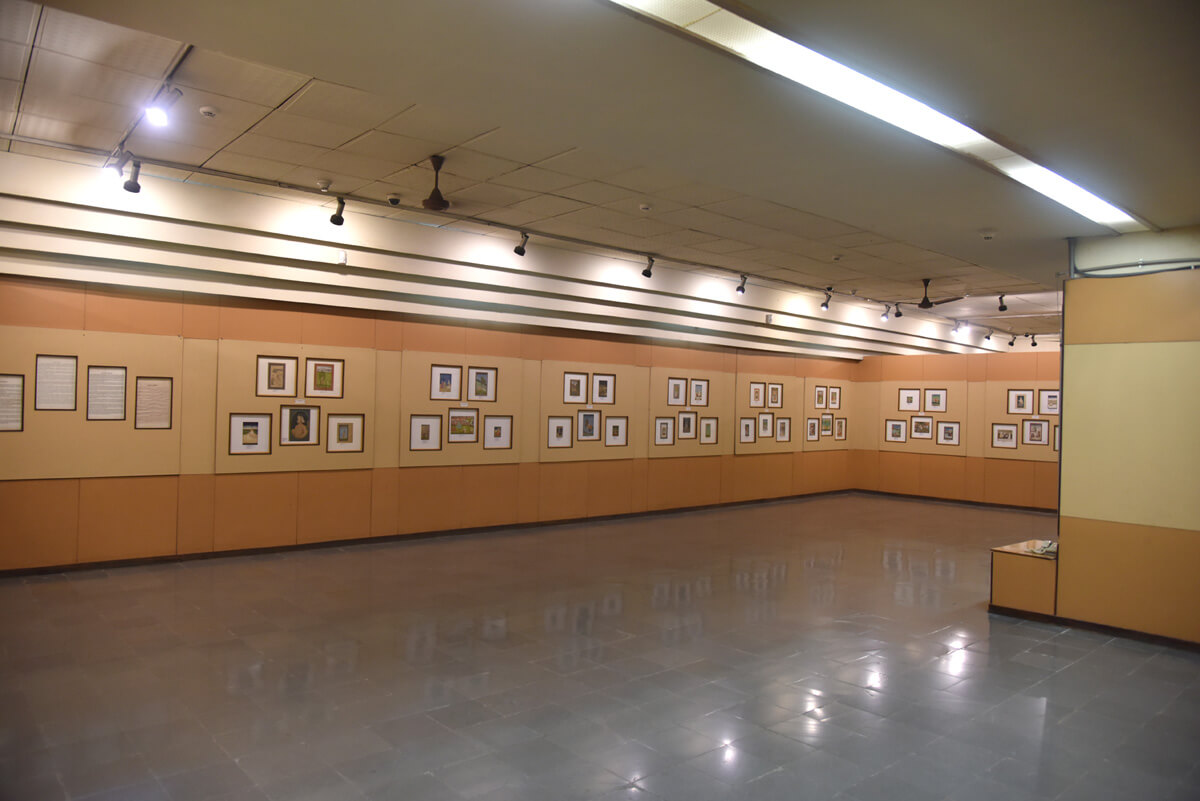
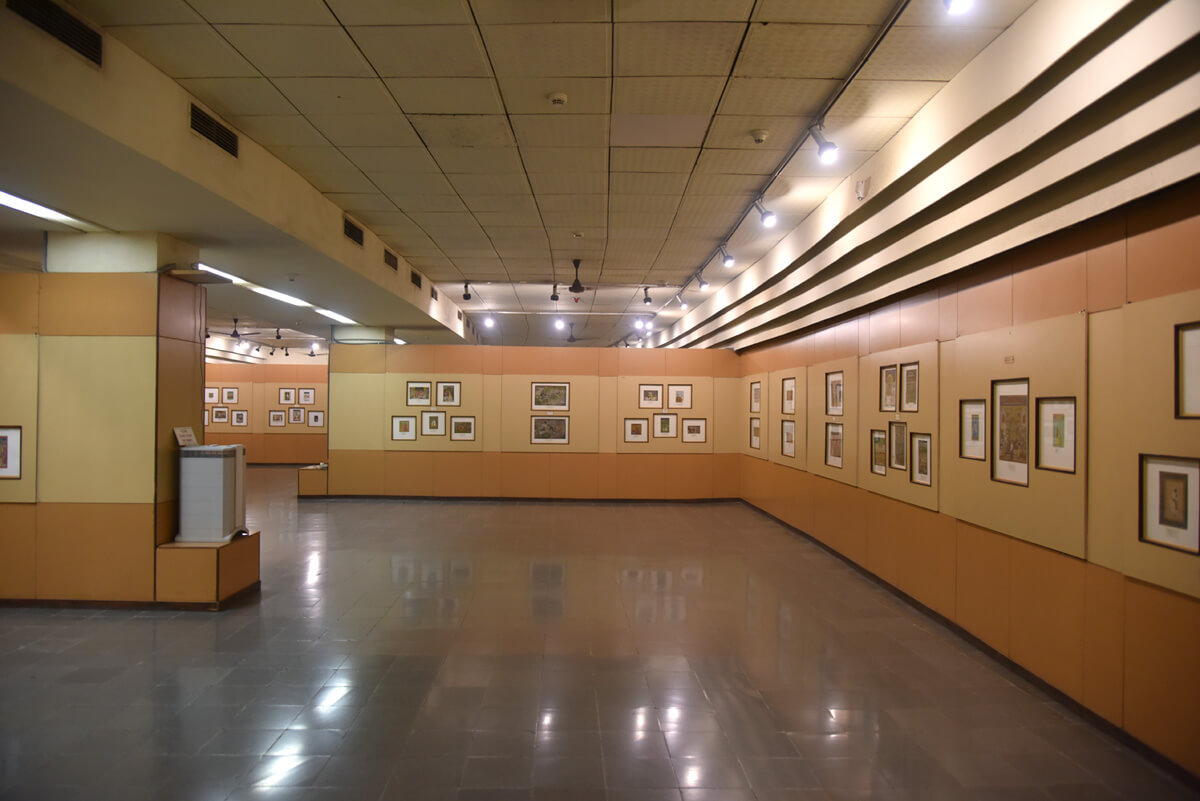
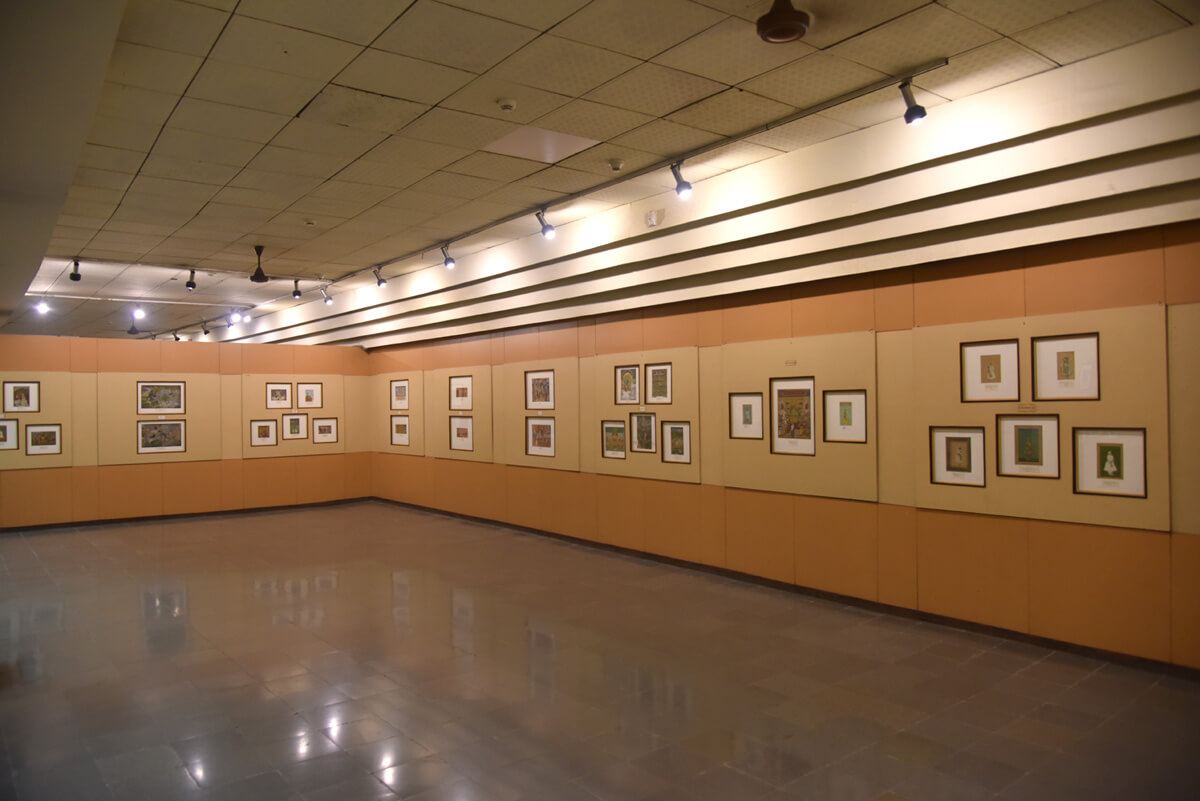
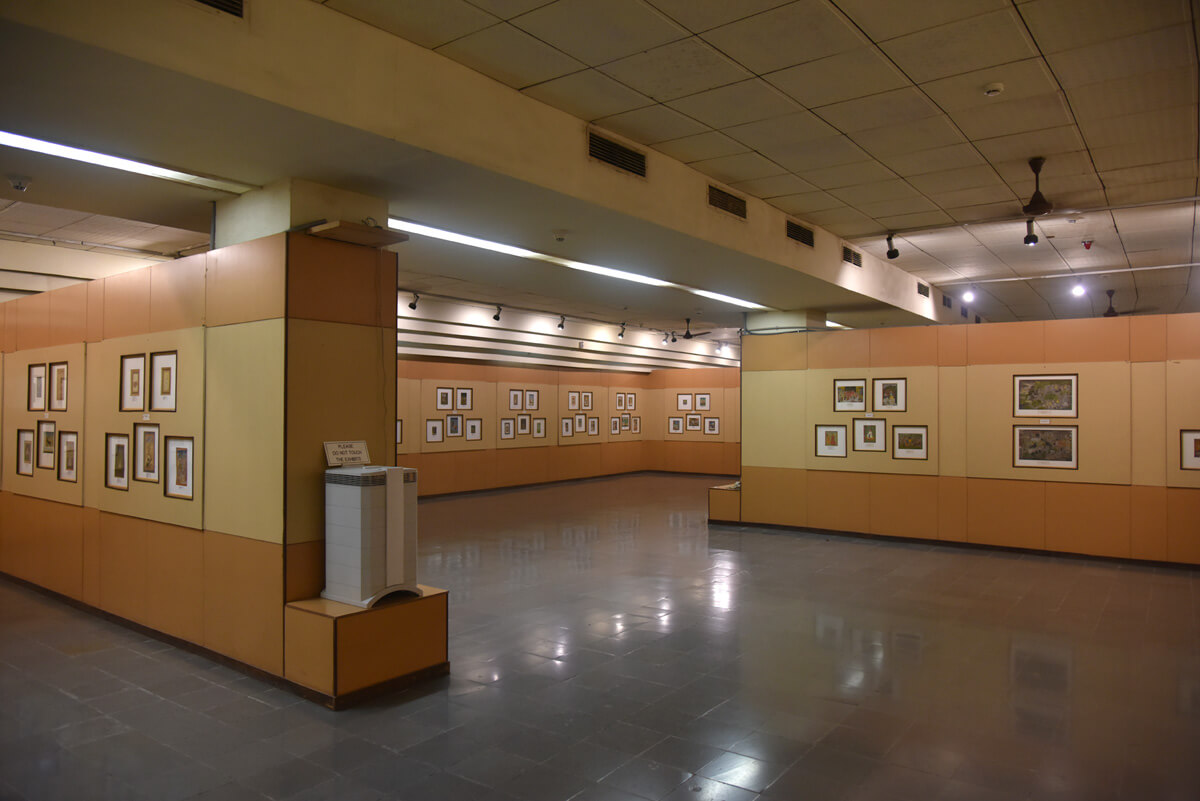
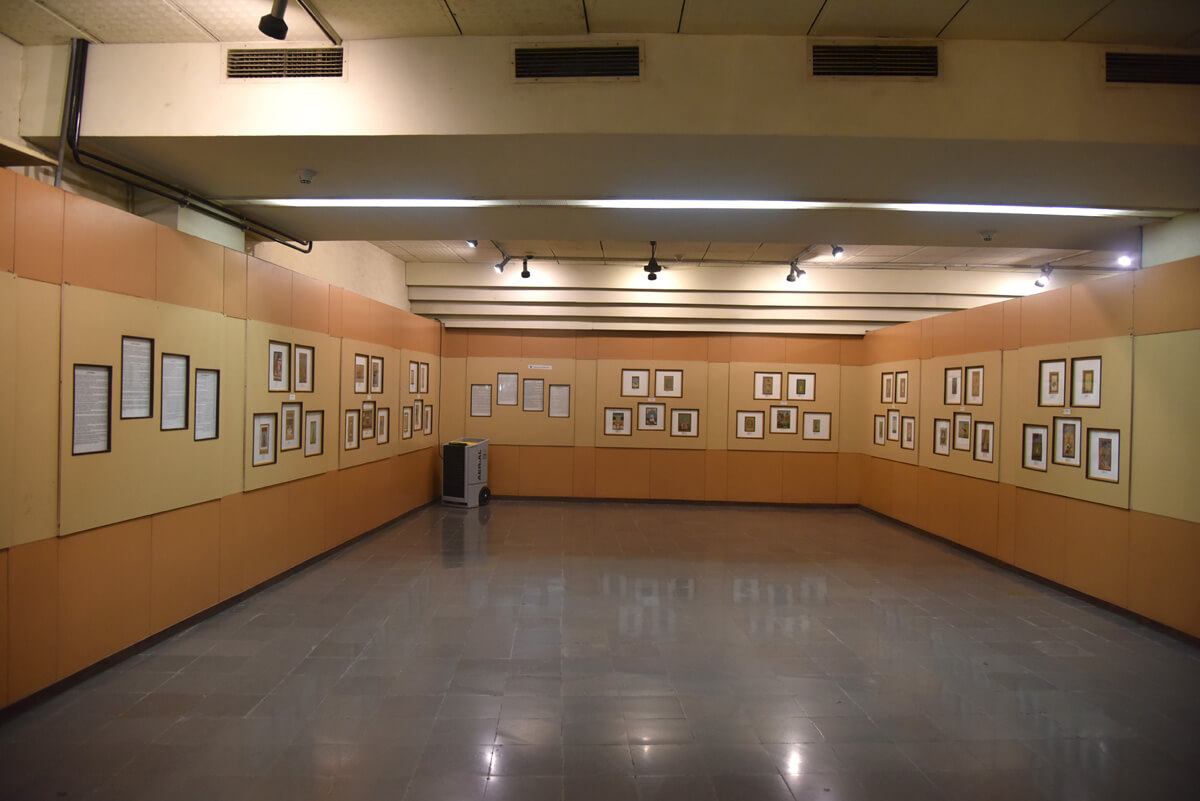
The study of Indian miniature painting is both fascinating and significant in understanding the country’s artistic heritage. Before the widespread use of paper in India, around the 14th century, paintings were made on cloth, wooden boards, and palm leaves, in addition to the earlier tradition of mural painting. (The statement regarding the “invention of paper” is historically inaccurate; paper was introduced to India much earlier.) The Museum houses numerous illustrated manuscripts of the Kalpasutra, Kalakacharya Katha, and other Jain texts belonging to the Gujarat School of Painting of the 15th and 16th centuries.
The Salar Jung Museum possesses several folios from early Jaina Kalpasutras, illustrated in the early Western Indian style of painting. These works are characterised by simplified landscapes, a restricted colour palette, angular draughtsmanship, and the distinctive projecting eyes typical of the style. The subjects depicted are primarily drawn from Jain religious narratives and mythology. A painted folio from the Bala Gopala Stuti demonstrates that themes from the Brahmanical tradition were also rendered in the stylistic conventions of the Jaina Kalpasutras. (Replace “Brahmanical cult” with “Brahmanical tradition”.)
The 16th century marked a period of remarkable development in the art of Indian miniature painting. One of the greatest achievements of the Mughal School during the reign of Emperor Akbar was the illustration of masterpieces of Indian and Persian literature. The art of Akbar’s reign successfully synthesised Persian artistic traditions with established Indian styles. The painting The Birth of a Prince exemplifies this synthesis, capturing the significance of the occasion while revealing both Persian and Indian artistic influences. The portrait of Raja Vikramaditya is another outstanding example of portraiture by Bichitr.
The Museum also houses an outstanding collection of illustrated manuscripts and miniature paintings from the Deccan. Among these is the Bhog Bal, dating to the 16th century and originating from Bidar, one of the museum’s prized possessions. (Title should be verified.) Fine illustrated manuscripts from the Golconda and Bijapur schools are also on display.
A painting depicting Jamshid Quli and Ibrahim Quli Conversing, belonging to the Golconda School, is another highlight of the collection. Rajasthan made a remarkable contribution to the development of Indian miniature painting. (Avoid the subjective phrase “romantic land”.) The Rajput School developed alongside the Mughal School while retaining its distinct indigenous character. The Malwa paintings on display depict scenes from the Ramayana, dating to the mid-17th century, as well as episodes from Hindu mythology belonging to the late 17th century.
The collection also includes illustrated folios from the Bihari Satsai produced by the Mewar School. The Museum also houses three paintings from a Ragamala series executed at Amber during the mid-18th century. The Museum possesses an important collection of paintings from the Pahari region of the western Himalayas.
Among them are paintings from the Basohli and Kangra schools. A painting titled Janmashtami, depicting Raja Sansar Chand, his son, and members of his court witnessing the festival, is one of the finest examples of the Kangra School. Raja Sansar Chand’s patronage is widely regarded as the golden age of Pahari painting. Raja Sansar Chand’s patronage is widely regarded as the golden age of Pahari painting. Other notable works include portraits of Raja Prakash Chand from the Guler School and Krishna Playing Holi with Gopis from Bilaspur, both of which are among the Museum’s significant holdings.