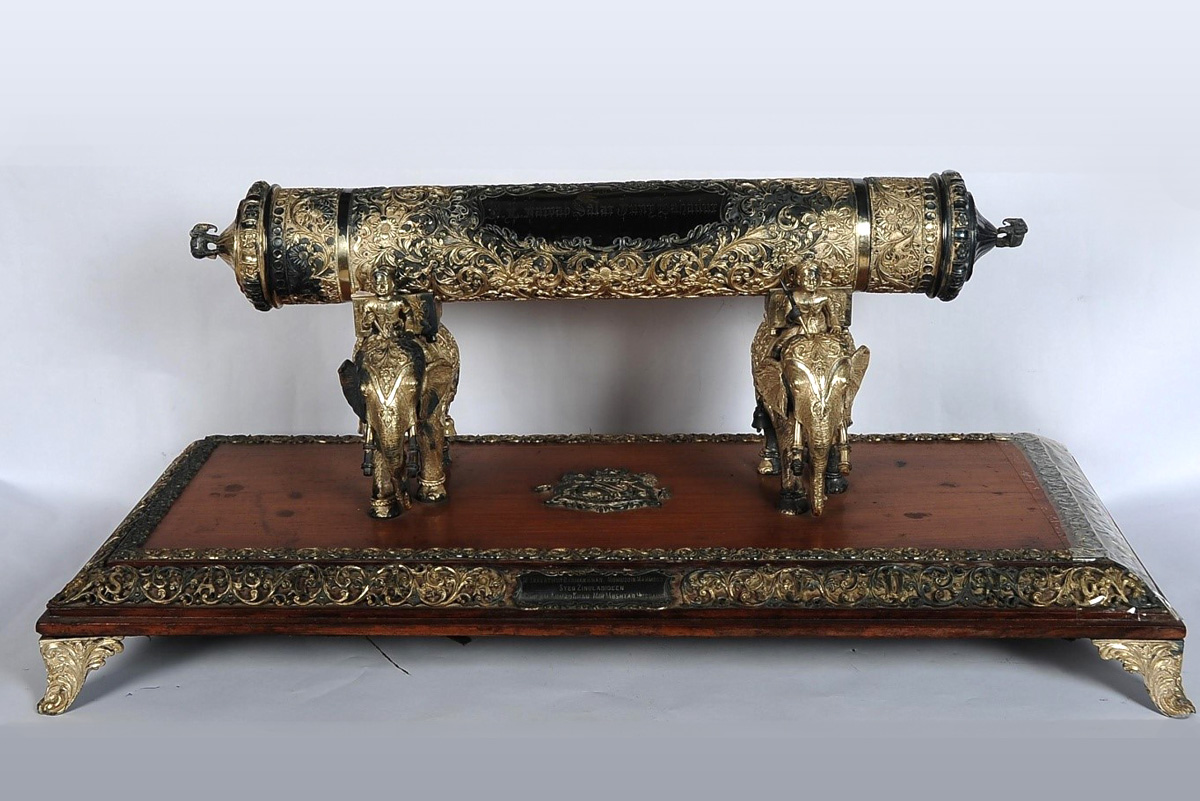
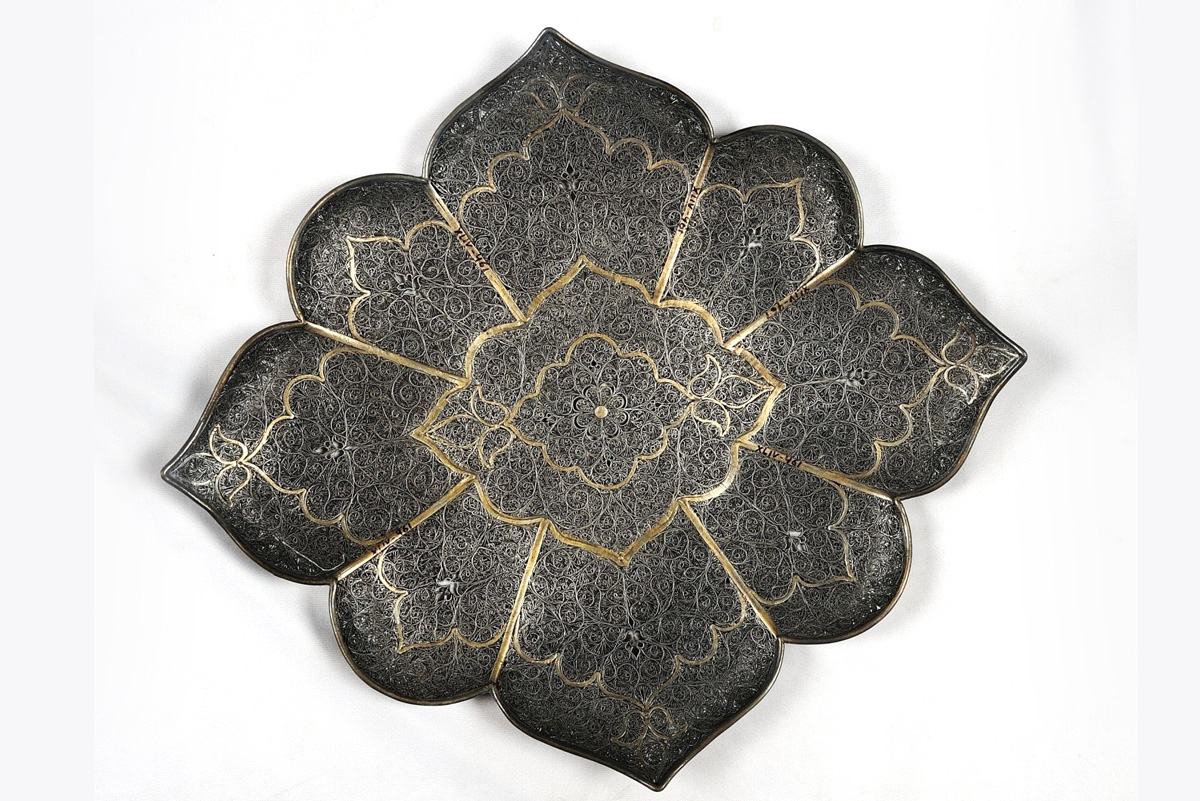
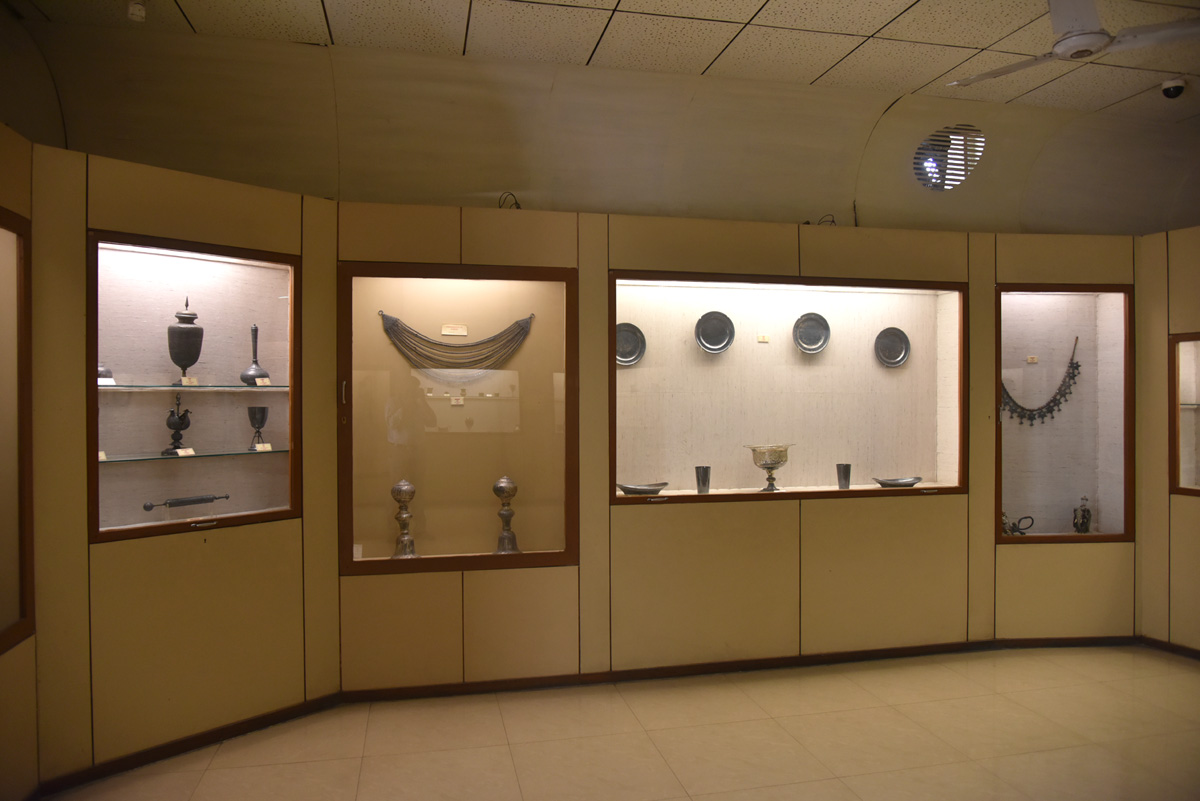
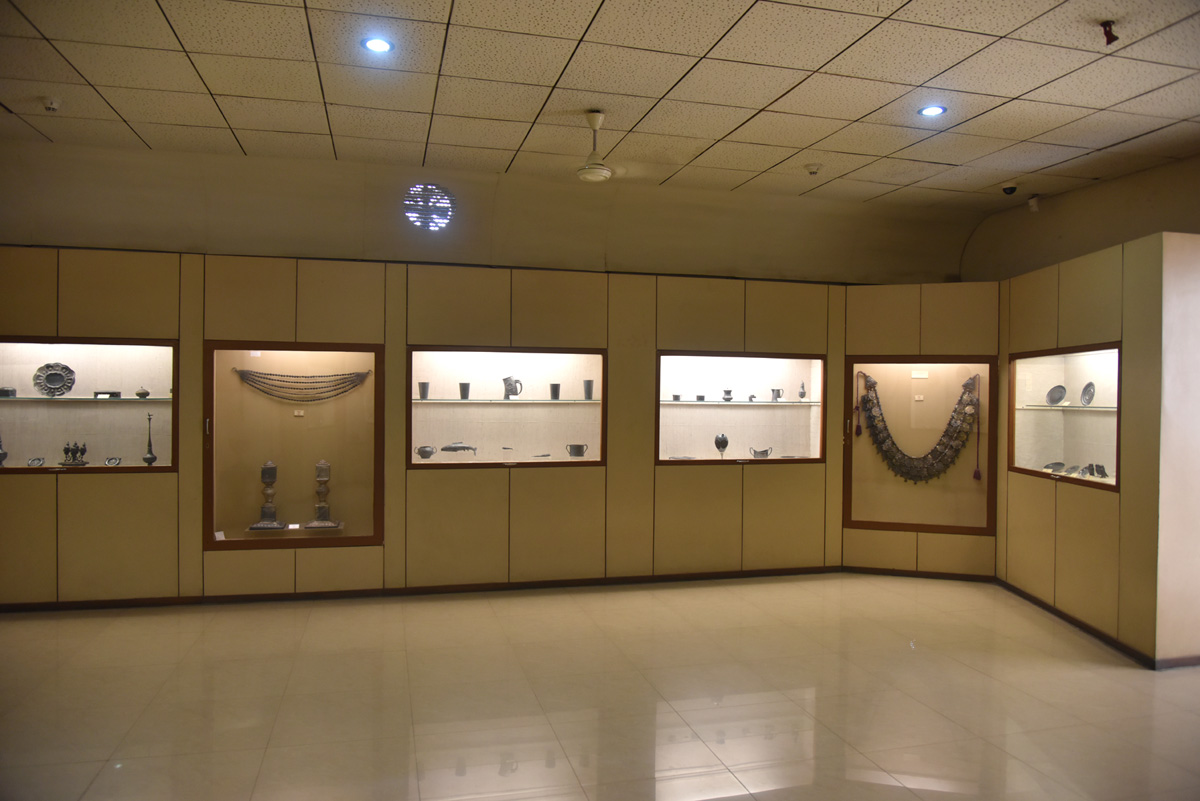
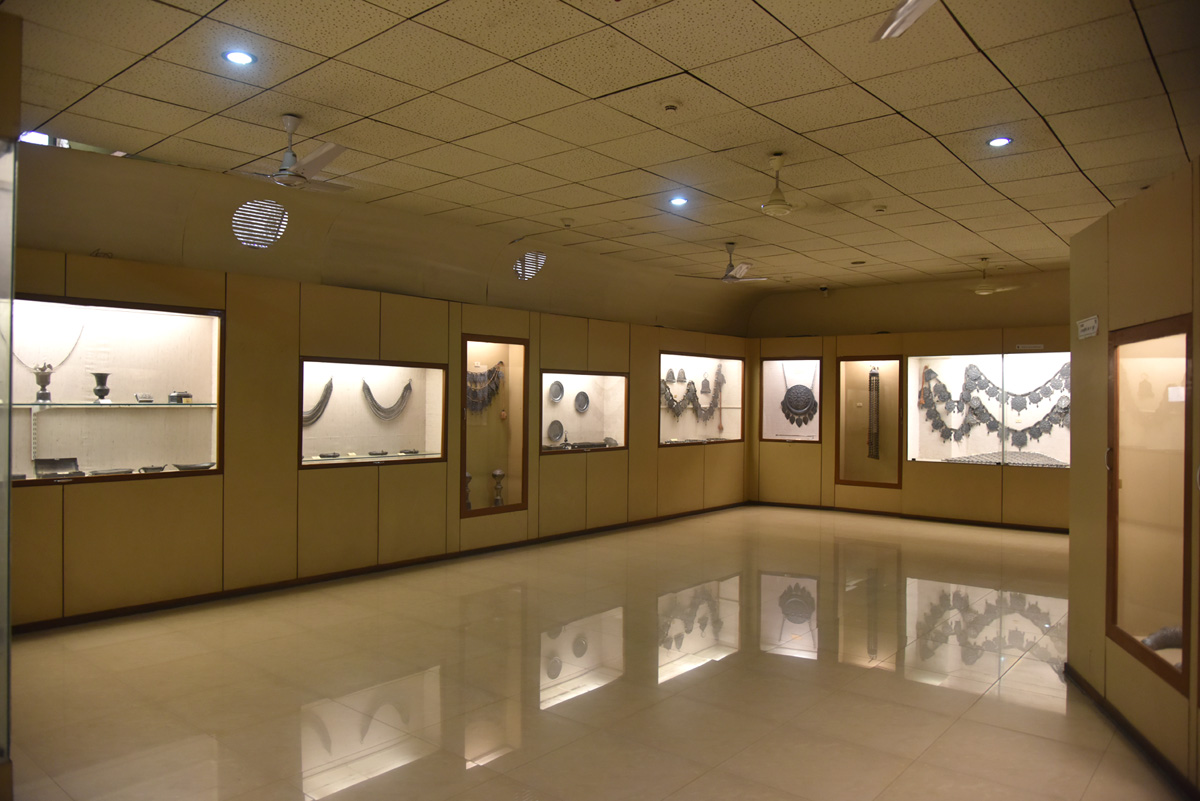
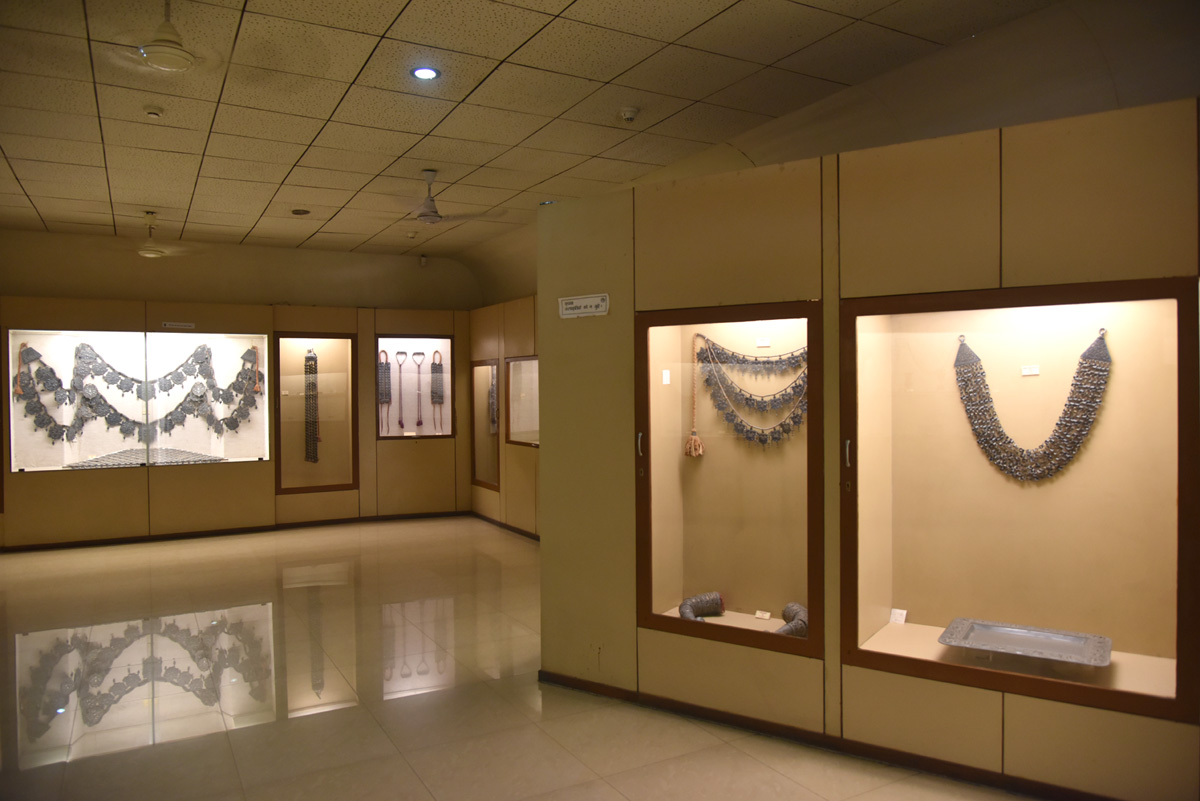
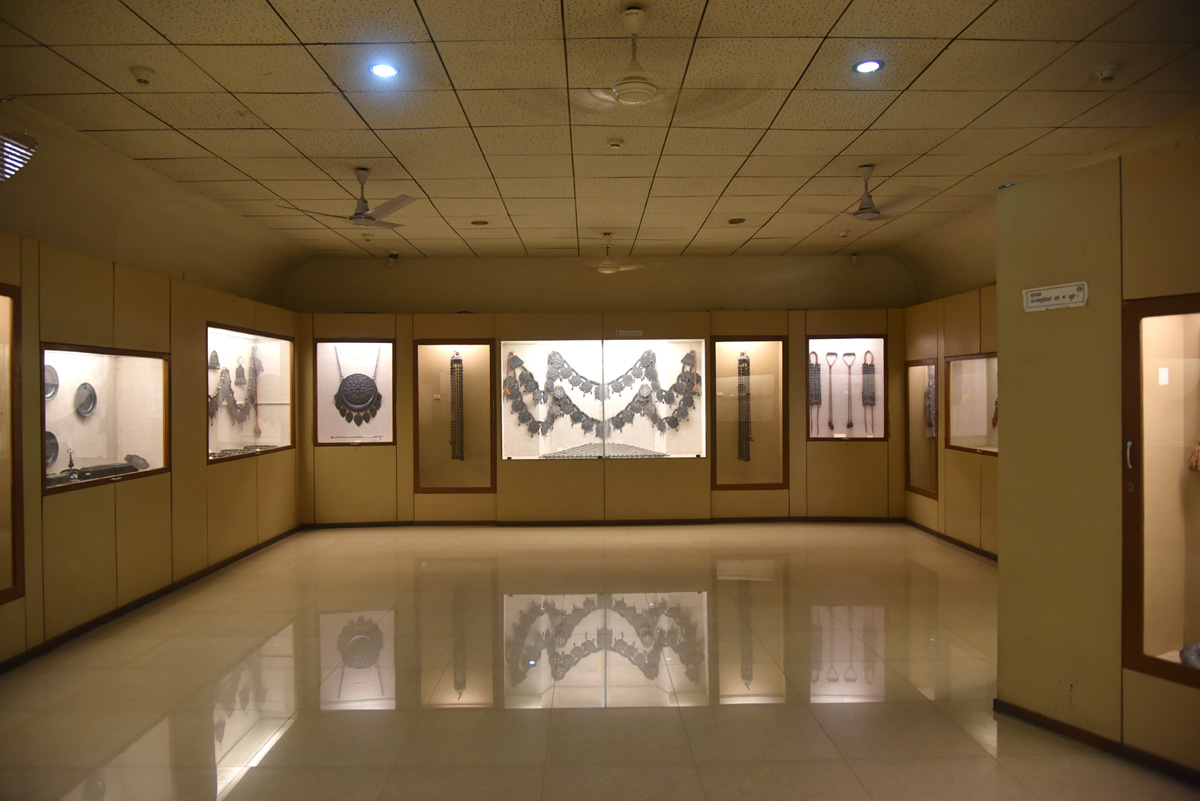
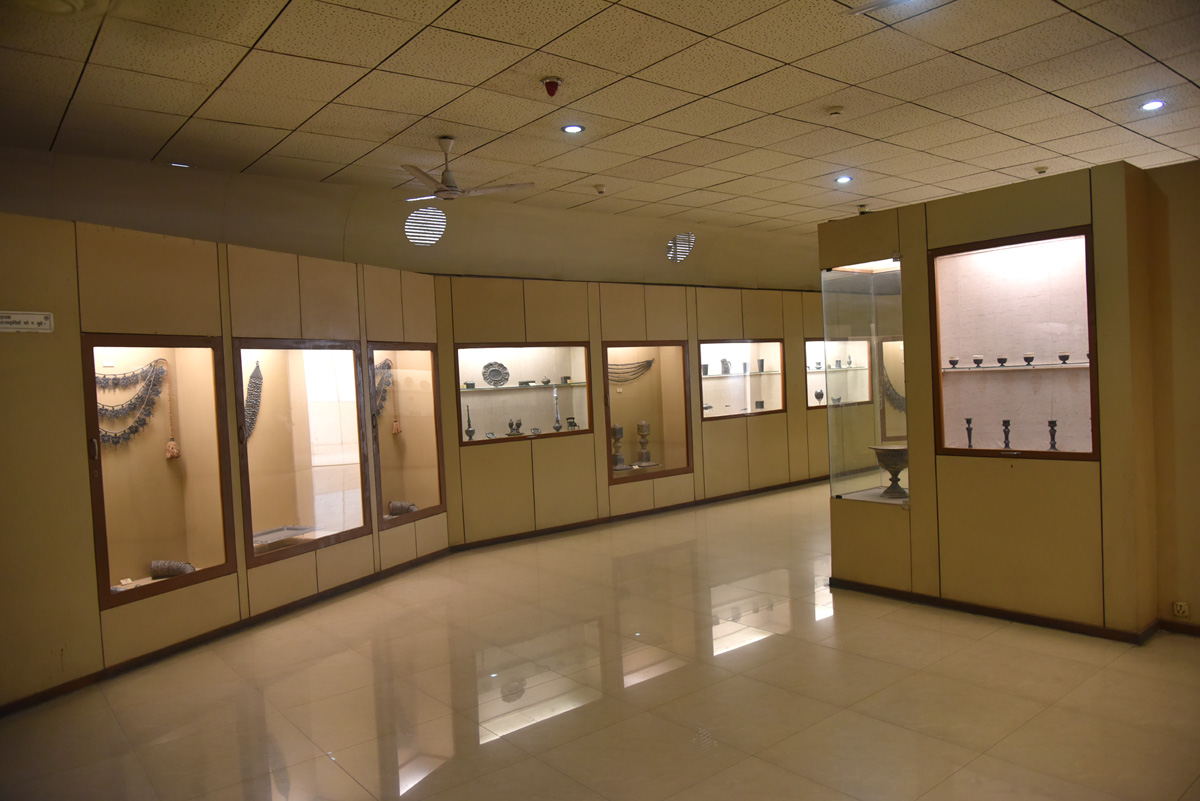
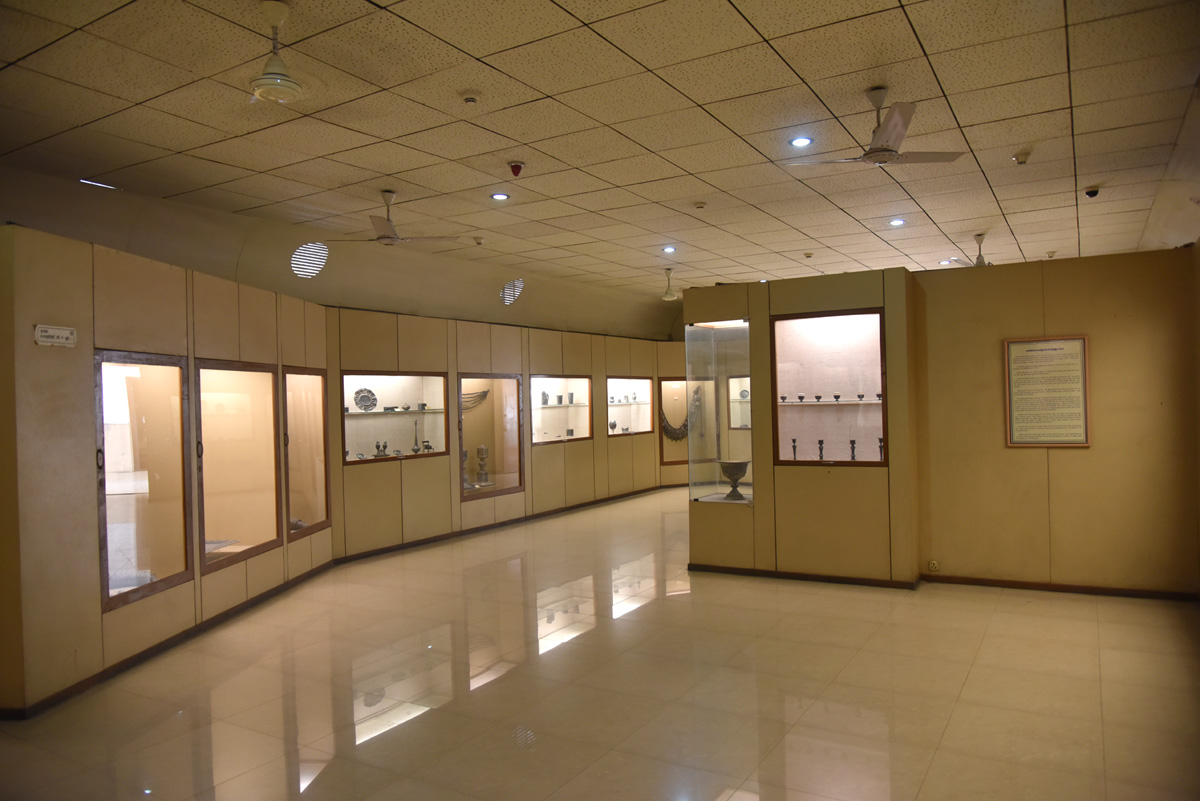
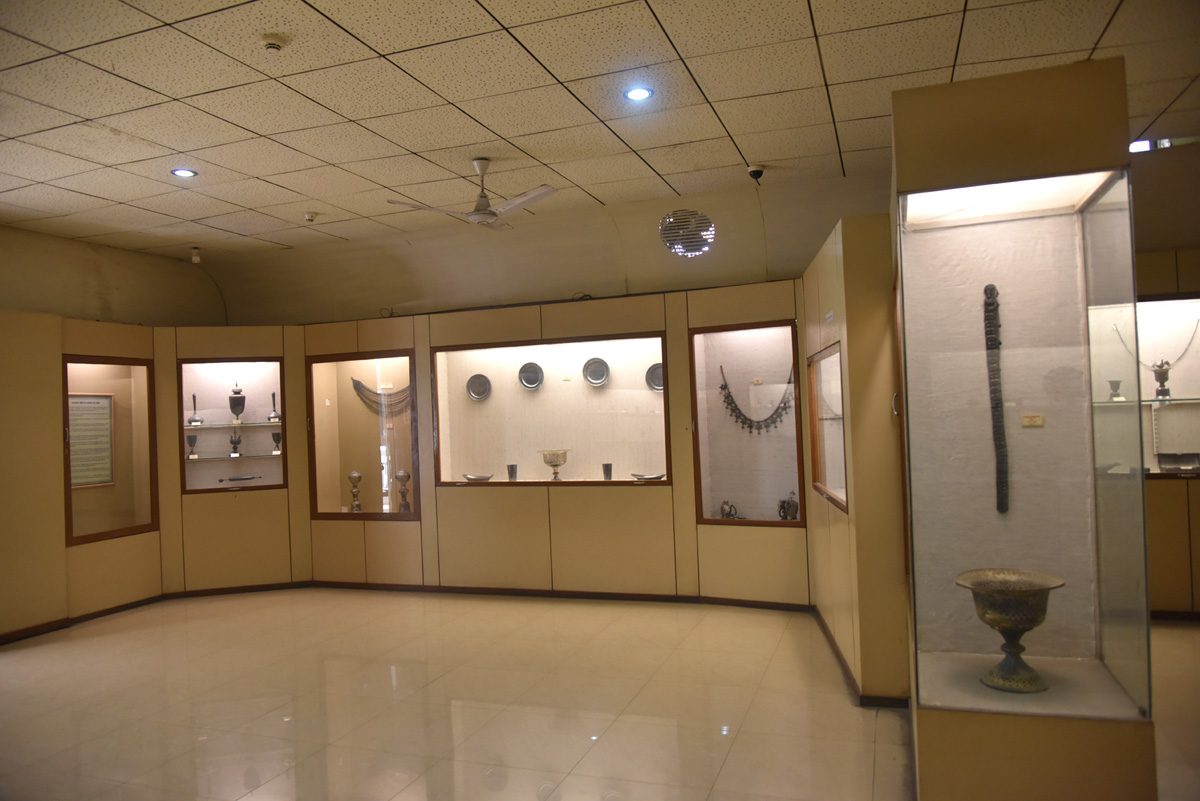
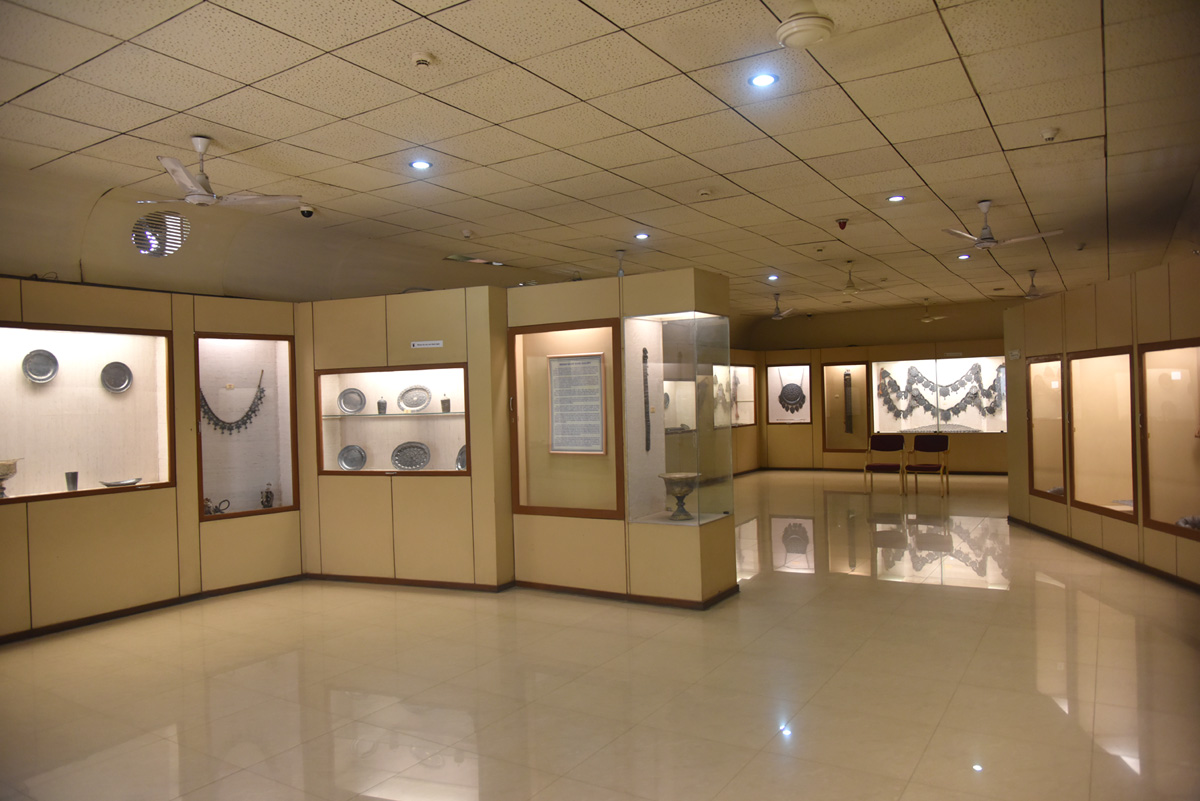
The Silverware Gallery displays an impressive collection of filigree objects from Karimnagar in Telangana and Cuttack in Odisha Fine, thread-like silver wires are drawn and intricately woven into delicate patterns to create objects such as earrings, pendants, trays, and other decorative items.
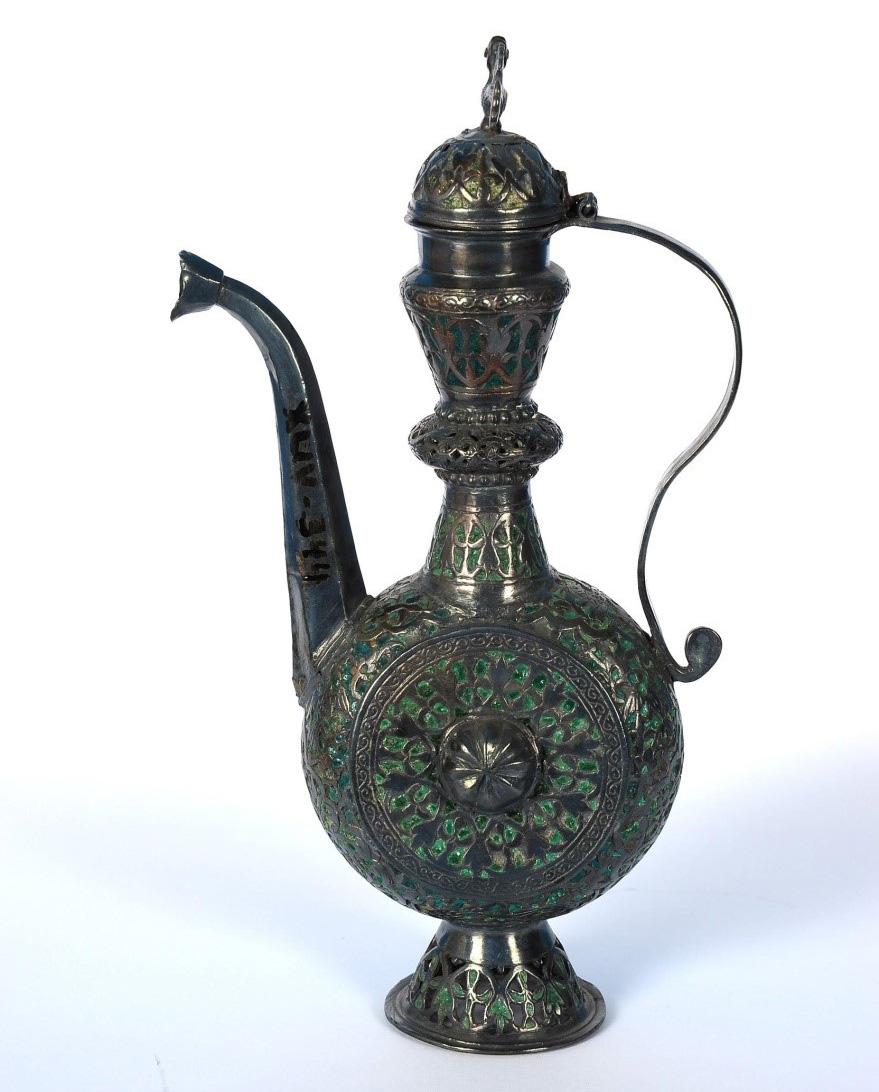
Indian craftsmen have long demonstrated exceptional skill in engraving, chiselling, and ornamenting decorative silver objects. One of the earliest surviving examples of such work in precious metals dates to around 50 BCE, when a silver patera was discovered by a mason during the excavation of a Buddhist site near Jalalabad, Afghanistan. Prior to that filigree as a form of metal decoration was already experimented in ancient Mesopotamia and Egypt, often crafted in gold. In some silverware, certain areas are gold-plated to facilitate enamelling or to enhance their decorative effect. Tarbha, in the Bolangir district of Odisha, is renowned for its exquisite silverware. Fine examples of Kashmiri silverware include huqqahs with deeply carved ornamentation featuring lotus flowers, chinar leaves, and trailing creepers.
The collection includes spice boxes, rosewater sprinklers (gulab posh), caskets, huqqahs, dining plates, tumblers, and water pots, all originating from Rajasthan. Gujarat, particularly the Kutch region, is renowned for its superior silverware. Its distinctive designs are characterised by deep carving and moulded decoration, a technique known as Kacchikaam.