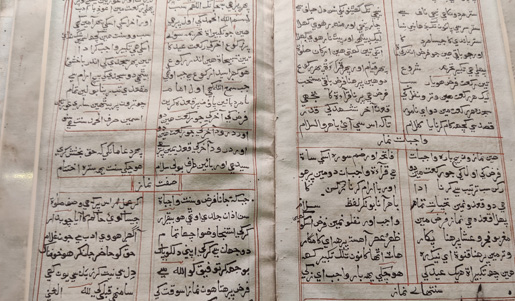
Salar Jung Museum Library
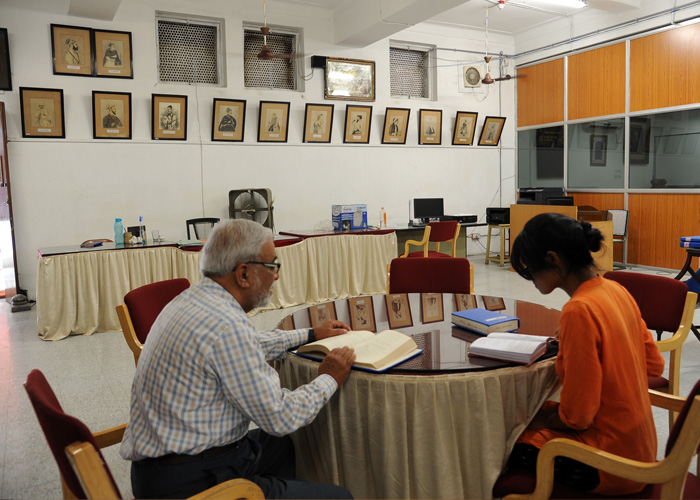
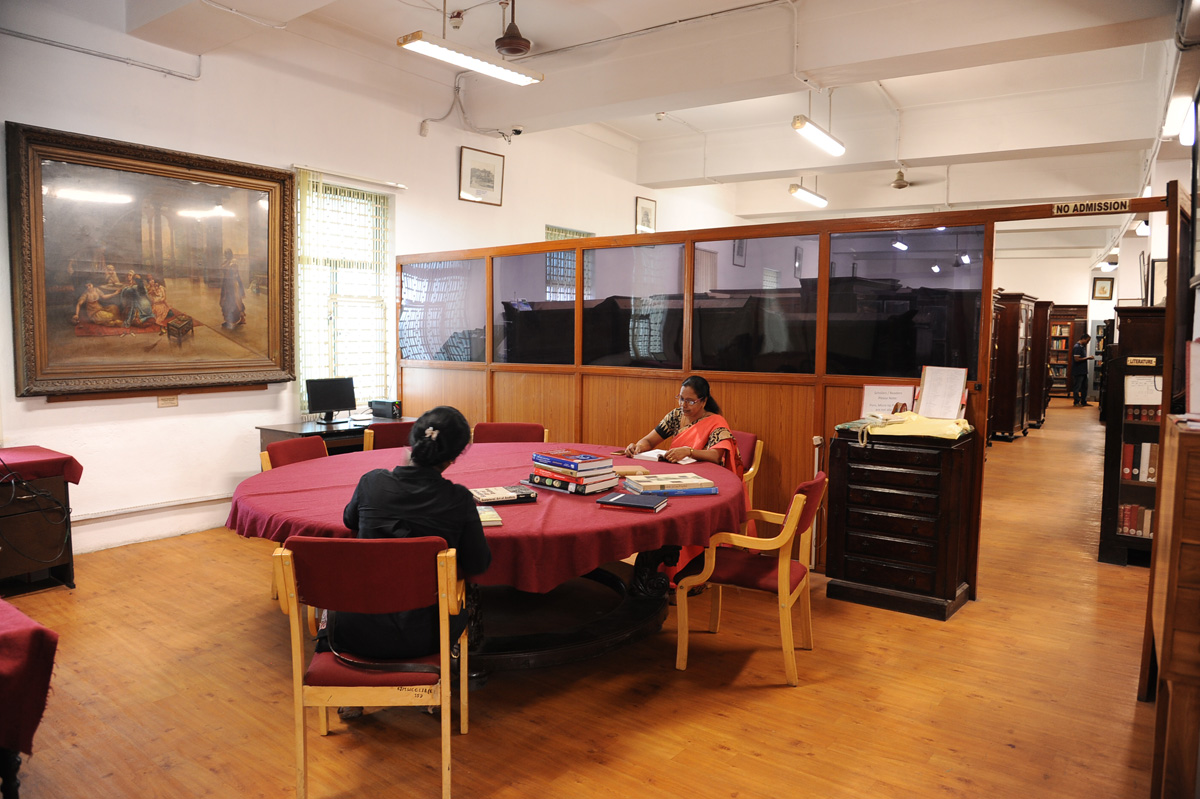
Visit the Salar Jung Museum Library and Reading Room, explore our wonderful collection of rare books
The Salar Jung Museum Library opened to the public in 1961 after the Act of Parliament was set in place. The Library’s manuscript collection, which possesses unique specimens, is one of the richest in the world.
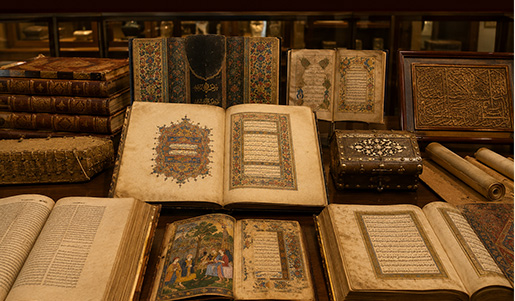
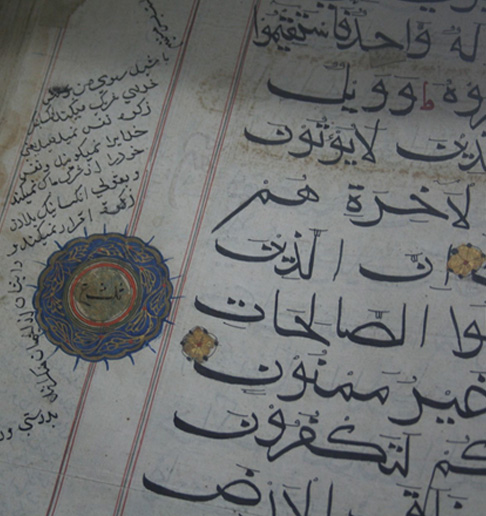
The collection contains many gems of calligraphic art and ornate embellishment, featuring gorgeous decorations with artistic blending of colours, with a profuse use of gold and mineral pigments—lavishly using lapis lazuli for blue, pearl for white, shangraf for red, and Zabarjad (emerald) for green. Calligraphers, artists and book binders all did their best in showing their respective arts and have thus paid their tributes to the written word.
Special Collections
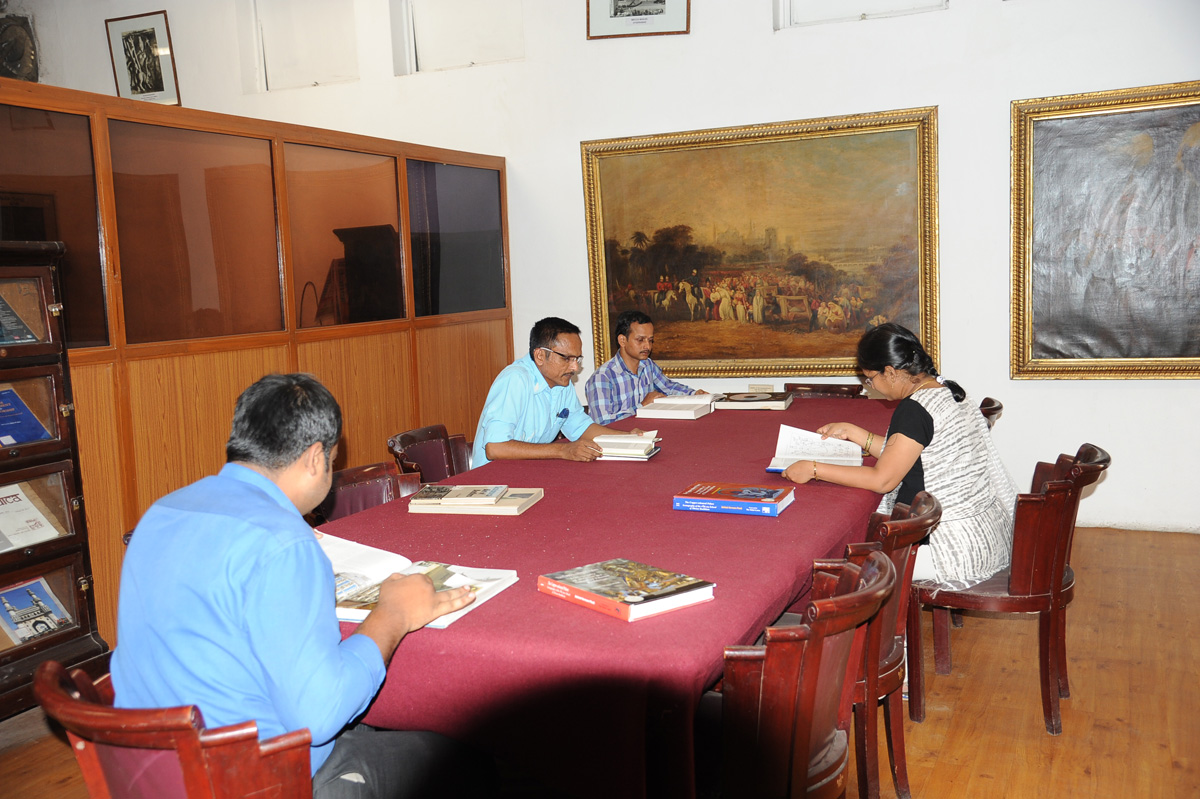
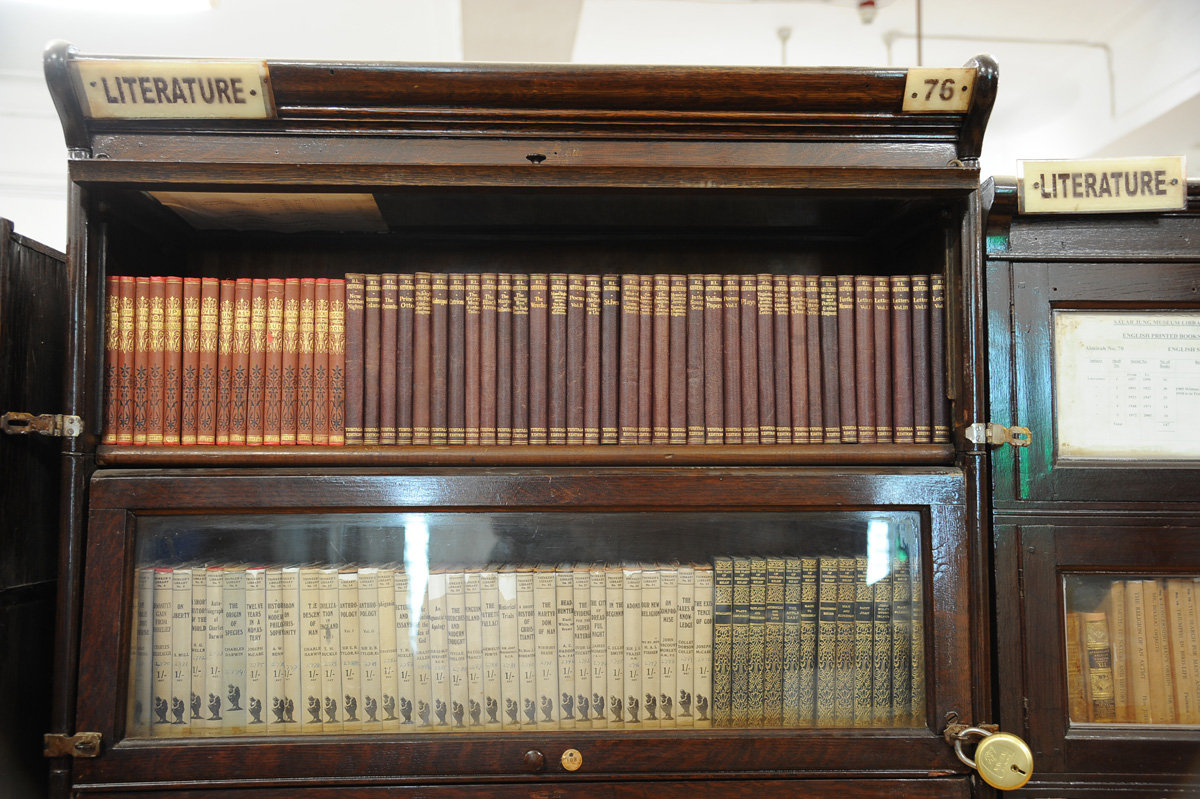
PRINTED BOOKS COLLECTION
English Books
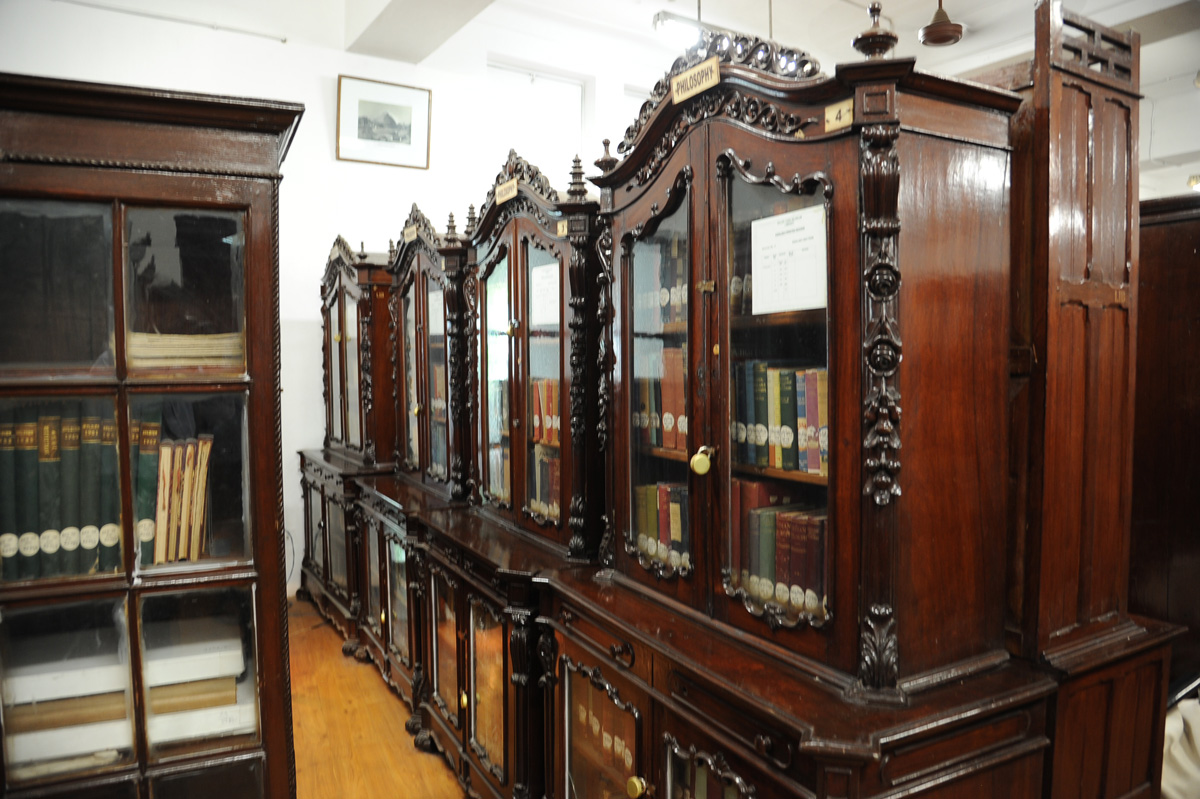
The English section consists of nearly 40,000 books and includes a rare book collection. It covers a variety of subjects ranging History, Philosophy, Engineering, Biology, Literature and Biography.
The oldest book in the library is one titled “General history of the Turks” by Richard Knolles, dated to 1631 CE. There are certain autographed titles in the collection. One of them is a book presented to Salar Jung I by Queen Victoria titled “Leaves” from the journal of our life in the Highlands from 1848 to 1861”. The Library also has a biography of Guru Nanak “Janam Sakhi”. The collection also has translations of important literary works for example, “The Ocean of Stories” is an English translation of “Katha Sarit Sagara”. The library has a huge collection of books on history of the entire world.
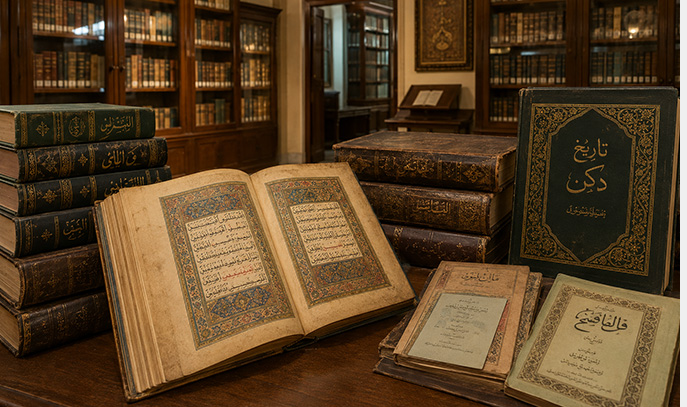
Urdu, Arabian and Persian Books
This section contains around 19,000 printed books, including approximately 13,000 in Urdu, 2,500 in Arabic, 3,500 in Persian, and 160 in Turkish. It covers a wide range of subjects, including Islam, literature, history, and medicine, from countries such as Iran, Iraq, Syria, India, and Asia. Many books are available on the history of the Deccan. Literary works of the classical poets of Urdu are available in the Library in this section.
Manuscripts Collection
The collection of manuscripts includes various media like parchment, textile, palm leaf, paper, glass, wood, and stone, different languages such as Arabic, Persian, Urdu, a few of Turkish, Dakhni, Pushtu, Hindi, Sanskrit, Telugu and Oriya and addresses more than 84 subjects.
The collection also includes more than 1500 calligraphic panels and albums of miniature paintings of different schools.
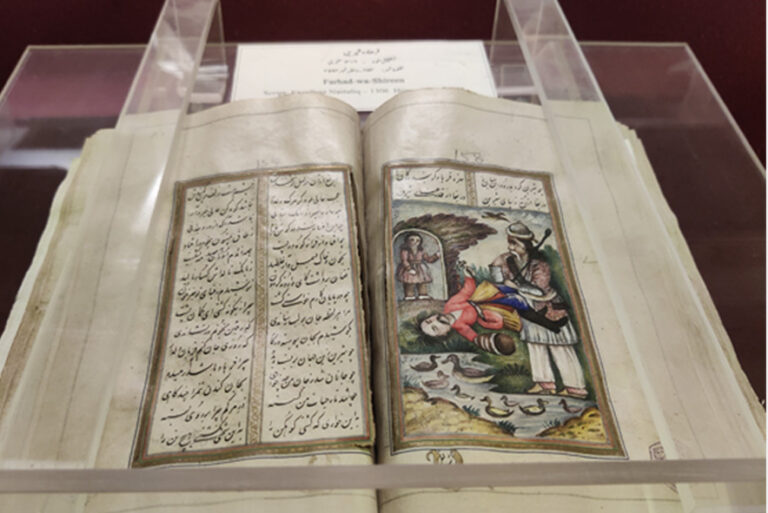
The manuscripts relate to an several religions, including Hinduism, Islam, Christianity, and Zoroastrianism. These manuscripts are in various shapes, sizes and forms. It may be noted that there are only two miniature manuscript copies of the Holy Quran in the world, and while one of these in the Iran, the other is in the Salar Jung Museum and its size is 2.4 cm. The Museum also has a large Quran which measures 60×30 cm. Some calligraphic panels are incised on glass, and the Museum has manuscripts with excellent nail work. The other calligraphic works are’ in many scripts, like Kufti, Thulth, Naskh, Ta’liq, Nasta’aliq, Gubar, Raihan, Shikasta, Diwani, Riqa, Bahar, Tughra, Ma’akus and in styles differing from the bold and archaic to the minute.
Arabic Manuscripts
The Library holds a collection of more than 2,500 Arabic manuscripts, the highlight being a rare mathematical work entitled ‘Sharhu Mukhtasar al-Mukhtasar’ on algebra (847 CE).
In astronomy, the earliest work in on the preparation and use of globe (16th cent). In the field of Medicine, the library boasts of manuscripts of Kilabul Qanun by Avicenna (Ibn Sina). In natural history the noted works are Hayatul Haiwan. In the field of Philosophy, an encyclopedia work in the library is Rasiallkhwanus Safa (16th cent). AI Tajrid fil Mantiq is well known work on logic written by Nasiruddin Tusi (1628 CE) and manuscripts of Ala Sharhil Malali is a copy from the imperial library of Emperor Jahangir. Manuscripts on Islamic theology that deal with Adiyah (Prayers) of Shiites and Sunnites, jurisprudence and Sufism also form a part of the collection. Ta’arruf Ii Madhabit Tasawwuf is a rare work on introduction to the Principles of Sufism (Delhi-1675 CE). The earliest codex of lexicon is Sahah by Abu Nasr (1218 CE). Jaiul Qawayed is a rare codex in the subject of Syntax (1576 CE) and about etymology a commentary on As Shafia written during the period of Nizam II in one of the prized possessions of Library.
Persian Manuscripts
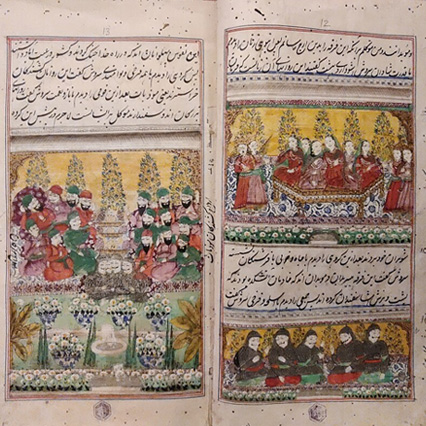
There are about 4,700 Persian manuscripts in the collection. The most outstanding is ‘Rauzatul Muhibbin’, which contains twenty illustrations belonging to the Bukhara tradition and was transcribed by the famous calligrapher Mir Ali Harvi. The oldest manuscript on Sunnite commentary is A’I Basair fil Wujuh wan Nazir, written in 1207 CE, in Arabic Naskh. On Tasawwuf (Sufism), the most valuable and useful treatise is attributed to Bayazid Bustami, who transcribed it in 1588 CE.
There are manuscripts about art, science, divination, astrology, magic and archery. There is one codex on agriculture and several codices on precious and semi-precious stones. On the art of calligraphy, the Museum has several manuscripts, in cookery there are two manuscripts entitled Dastur-e-Pukhtan-el Atamaah written for Shahjahan. There is a codex on the preparation of perfumes too.
In medicine the oldest Arabic translation in Persian is Tarjuma-e-Minhajul Mayan written for Shahjahan by Muhammad ar-Radi. The Museum also has the oldest medical encyclopedia transcribed in India. In veterinary sciences, the codex Mualaja-e-Janwaran is the earliest available manuscripts on the treatment of animals and is dedicated to Firuz Shah (1281 CE).
Urdu, Turkish, Pushtu, Hindi and Oriya Manuscripts