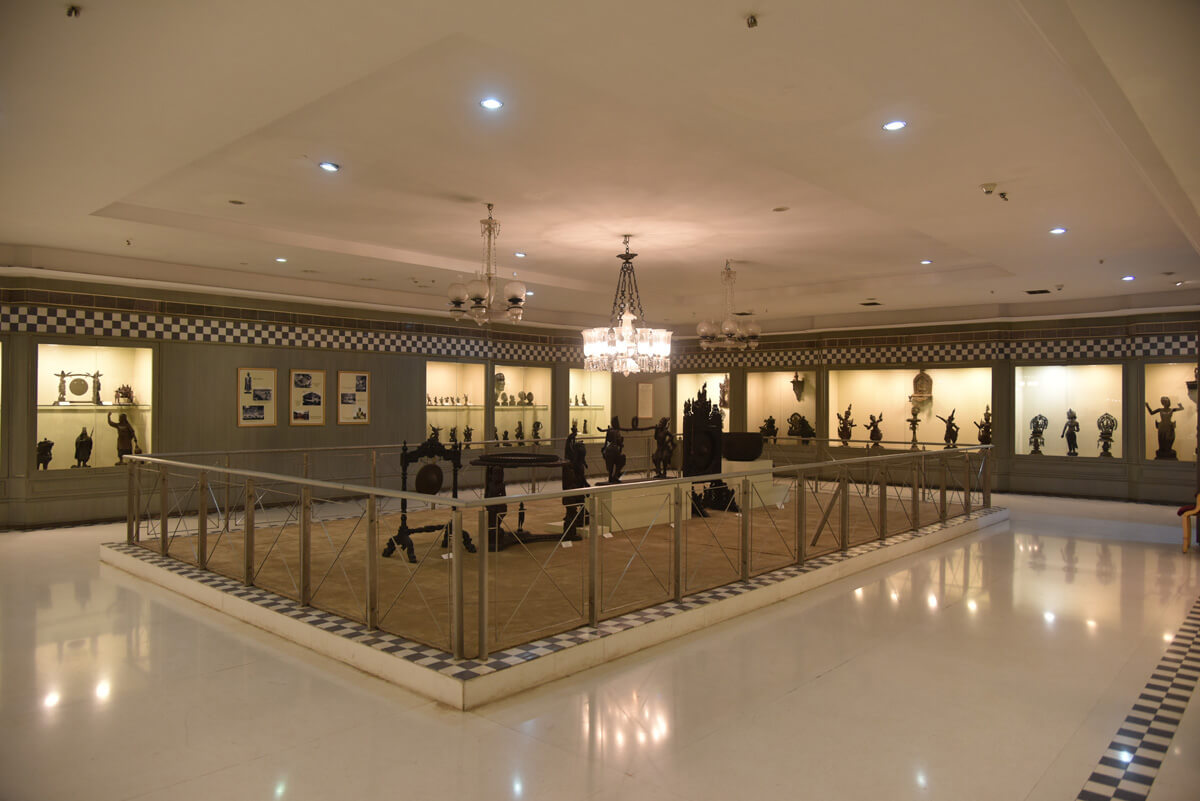
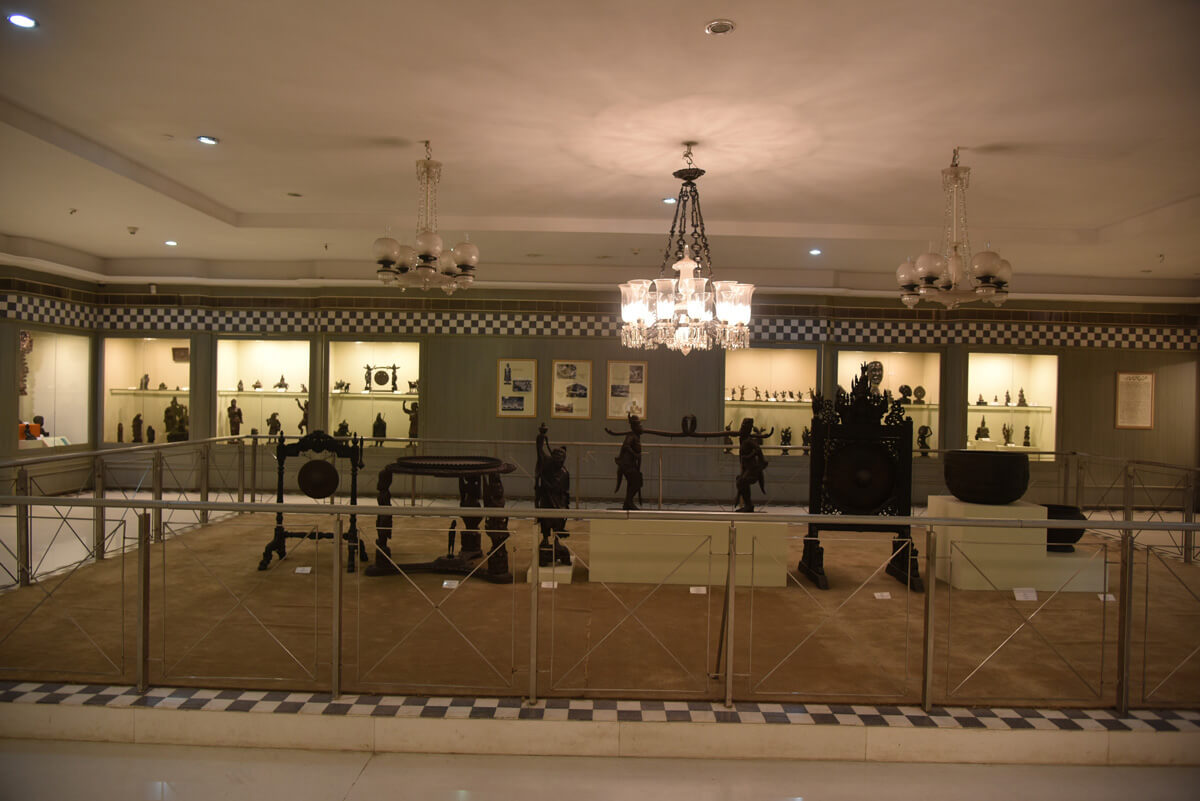
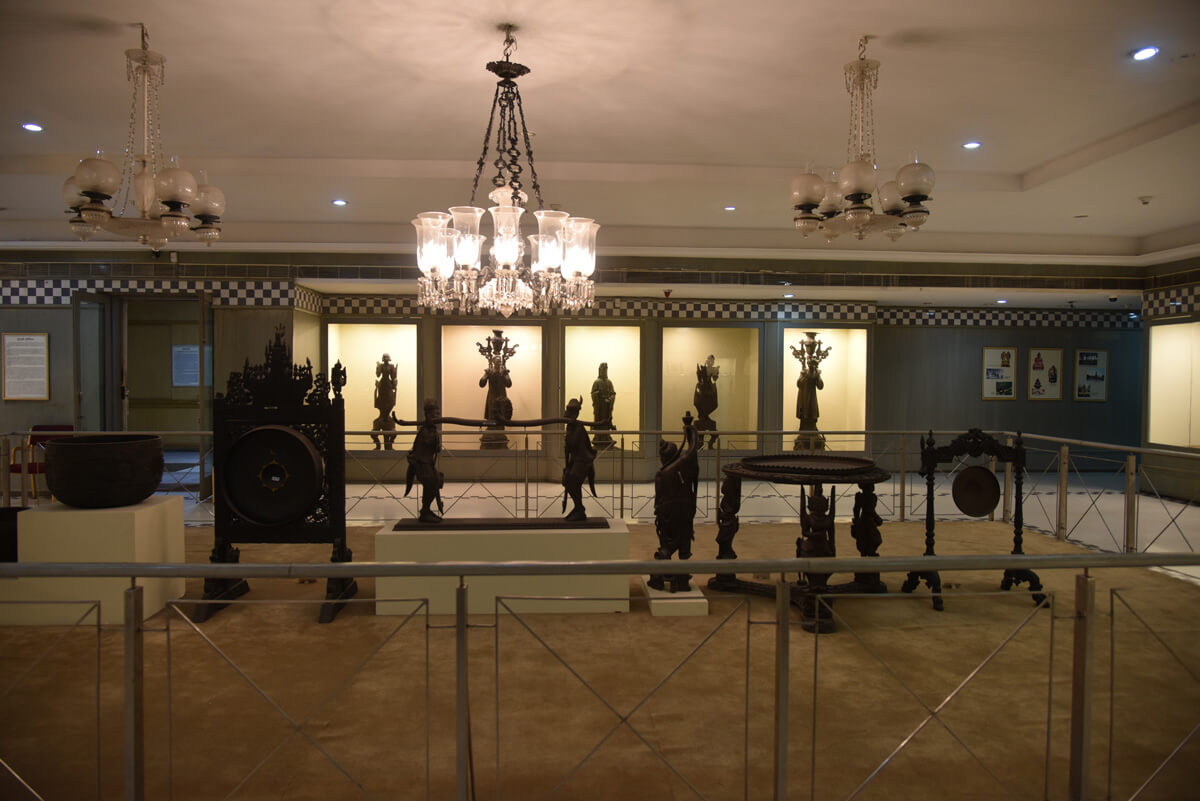
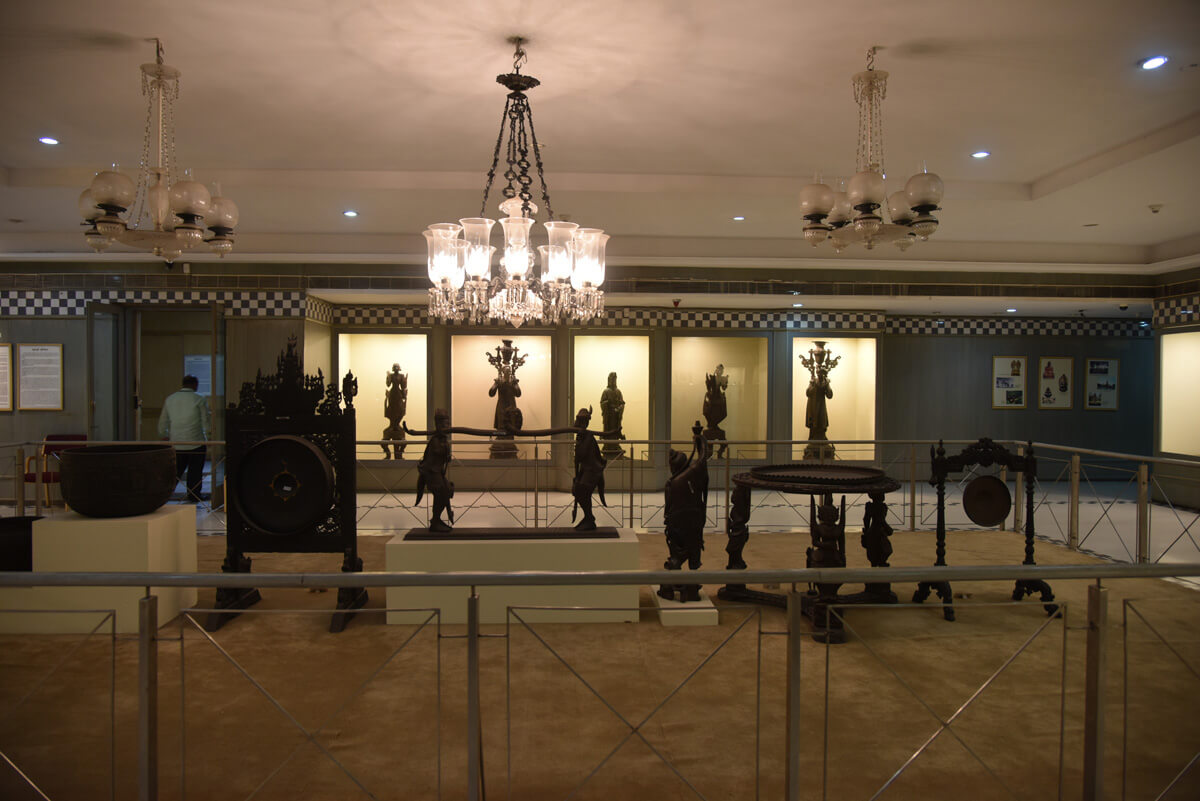
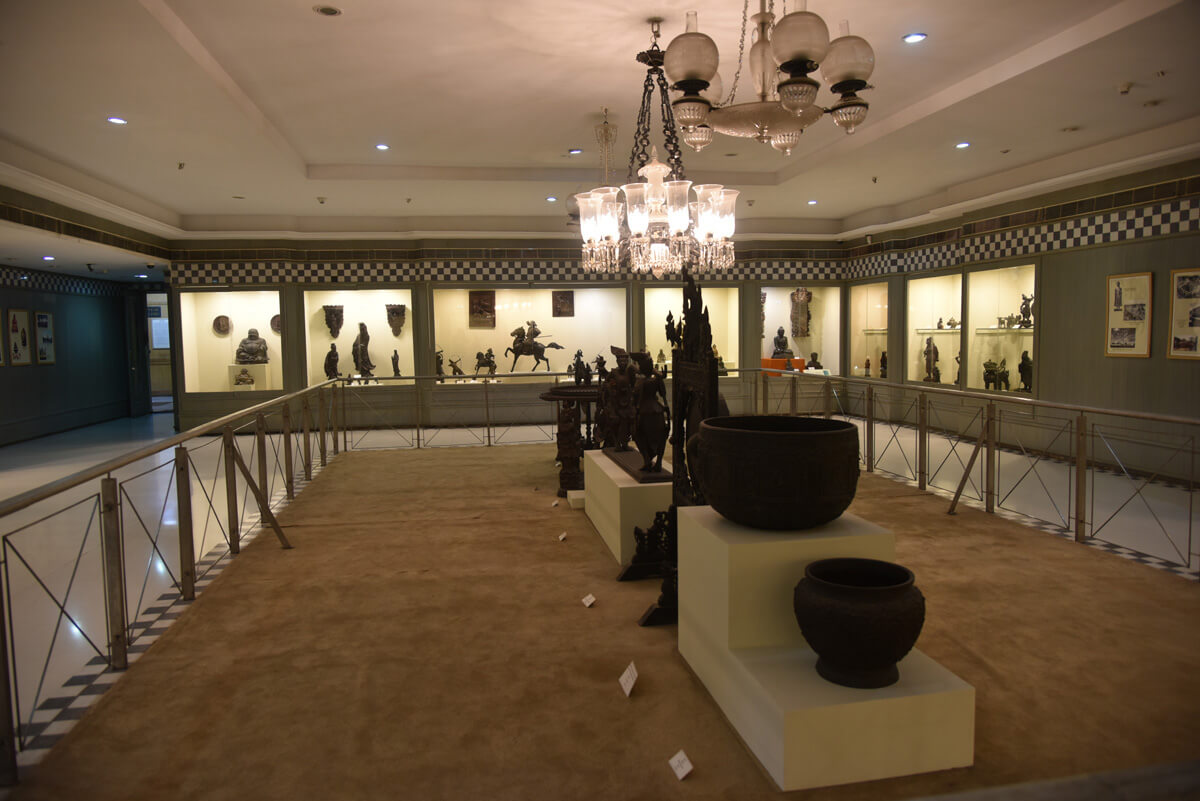
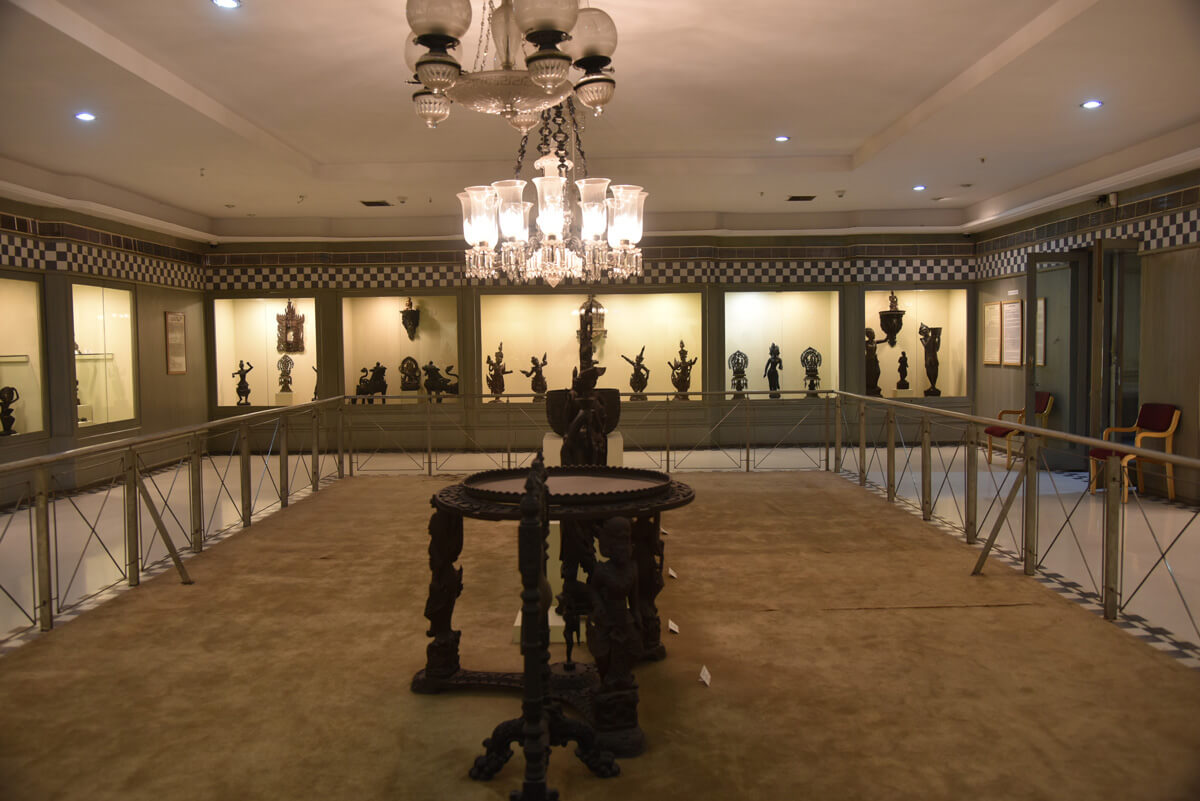
This gallery presents a fascinating selection of artistic traditions from Nepal, Tibet, and Burma (Myanmar). The collection comprises works in bronze, metal, and wood. Although predominantly Buddhist in character, the gallery also includes a number of secular and ceremonial objects.
Nepalese art is renowned for its exceptional craftsmanship in copper and bronze sculpture. The Nepalese collection at the Salar Jung Museum primarily comprises bronze temple lamps, khukris (traditional Nepalese daggers), and bronze sculptures of Buddhist deities.
Among the highlights are two temple lamps featuring images of Lord Ganesha. Interestingly, one lamp depicts a Buddhist deity standing above a kneeling figure of Ganesha, while the other presents the reverse arrangement. As Buddhists venerate Vighnantaka, a deity associated with the removal of obstacles, these lamps are believed to have been created for use in Buddhist temples. (This interpretation should be verified with curatorial research, as it is presented as an inference rather than an established fact.)
Among the objects embellished with semi-precious stones is a nineteenth-century miniature domestic shrine containing a crystal image of the Buddhist deity Tara, adorned with a mala of turquoise and agate beads. The collection also includes finely crafted Nepalese khukris with sheaths and handles decorated with semi-precious stones. (Use “handles” rather than “hilts” unless referring specifically to swords.)
Tibet shares close religious, cultural, and artistic traditions with Nepal. The Tibetan collection reflects these traditions through thangkas (scroll paintings), copper teapots, and other ritual objects. Thangkas are among the most celebrated artistic traditions shared by Nepal and Tibet. Among the museum’s collection of thangkas is an eighteenth- or nineteenth-century example depicting Padmasambhava, the revered Buddhist master credited with establishing Vajrayana Buddhism in Tibet. (The term “Lamaism” is outdated and should be avoided.)
Owing to its geographical proximity to India, Burmese art reflects the influence of both Buddhism and Hinduism. Burmese wood carving is renowned for its exceptional craftsmanship and enduring artistic traditions. (Avoid subjective comparisons.)
The museum houses an impressive collection of wooden sculptures executed in high relief, in the round, and in multi-layered carving. (Corrected “comprises of” and “multilane”.) The collection also includes fine examples of lacquerware in gold, red, and black, executed on bamboo and other softwoods.
A nineteenth-century rectangular teakwood bas-relief depicting The Birth of Buddha features intricately carved borders incorporating zodiac motifs and was designed as a wall hanging. The collection also includes finger bowls decorated with gold on a black ground, as well as examples featuring geometric motifs, all demonstrating the refinement of Burmese craftsmanship.